
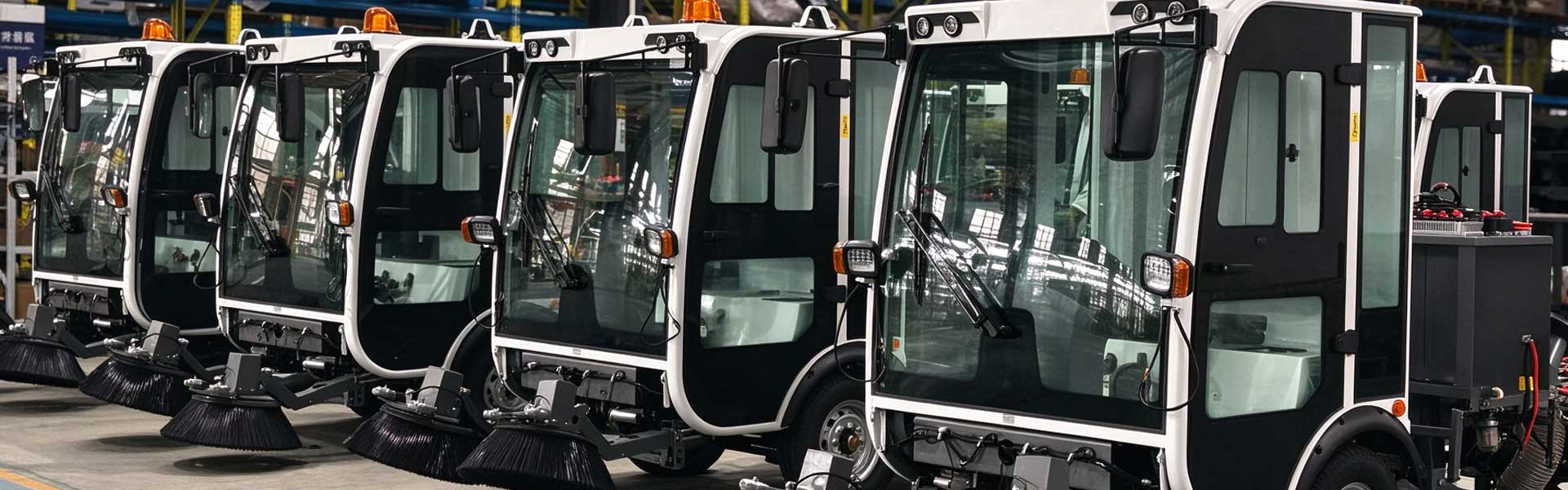
Cement plants, aggregate yards, and building material facilities often deal with dust, sand, small stones, and other debris generated during material handling and vehicle movement. Keeping these areas clean can help improve housekeeping, support safer traffic routes, and reduce the amount of loose material carried into nearby workspaces.
For facility managers, industrial cleaning contractors, and equipment distributors, selecting a suitable floor sweeper requires more than comparing advertised cleaning capacity. The machine must match the debris, floor conditions, working area, and cleaning schedule.
1. Identify the Cleaning Environment
Cement and aggregate facilities may include indoor production areas, warehouse floors, loading zones, vehicle routes, and outdoor paved surfaces. Each location can present different cleaning challenges.
Fine cement dust may require effective dust collection and filtration, while larger debris may demand an appropriate sweeping system and suitable hopper capacity.
Before purchasing an industrial floor sweeper for cement plant applications, identify whether the machine will operate indoors, outdoors, or in both environments.
Also consider whether the surface is smooth concrete, rough concrete, asphalt, or another material. Not every sweeper is designed for loose aggregate, uneven ground, or heavy outdoor debris.
2. Compare Sweeping Capacity and Operating Time
Large industrial facilities may need to clean extensive floor areas within a limited maintenance window. A machine's stated theoretical cleaning capacity can help with initial comparisons, but actual productivity depends on turning, obstacles, debris levels, operator practices, and time spent emptying the hopper.
Important purchasing considerations include:
-
Cleaning width: Evaluate the main brush width and any side brushes.
-
Rated cleaning capacity: Compare the manufacturer's stated area coverage and operating assumptions.
-
Dust collection: Review the filtration system and its suitability for the type of dust generated.
-
Hopper capacity: Consider how frequently collected debris must be emptied.
-
Battery or fuel system: Match the power source to the working schedule and site requirements.
-
Machine dimensions: Ensure the sweeper can access the intended areas.
-
Maintenance access: Check how brushes, filters, and other service items are replaced.
For facilities with extended operating hours, confirm the expected working time per charge or refueling cycle.
3. Choose Between Walk-Behind and Ride-On Models
Walk-behind sweepers may suit smaller indoor areas, narrow passages, and localized cleaning tasks. Ride-on models can be more practical for large warehouses, expansive paved areas, and facilities with longer sweeping routes.
The right choice depends on cleaning area, operator workload, maneuverability, debris volume, and available budget.
A larger machine is not always the better investment. If the working area contains narrow access points or frequent obstacles, a smaller model may deliver more practical results.
For rough outdoor areas, buyers should confirm that the machine's wheels, ground clearance, brush system, and chassis are suitable for the actual surface conditions.
4. Evaluate Dust Control and Maintenance
Dust management is particularly important in cement-related environments. Buyers should ask the supplier about the filtration arrangement, filter maintenance requirements, and any operating limitations associated with fine dust.
Where dust exposure presents a health or regulatory concern, a sweeper should be evaluated as one part of a broader dust-control program rather than treated as a substitute for source extraction or required protective measures.
Maintenance planning also affects long-term operating costs. Check the availability and replacement intervals of brushes, filters, seals, and other consumables.
5. Purchase From an Industrial Sweeper Supplier
A reliable industrial floor sweeper supplier should help buyers match machine specifications to the facility's conditions.
Request product data, operating videos, dimensions, hopper capacity, cleaning width, power configuration, filtration details, and recommended maintenance information.
For overseas buyers, confirm export packaging, spare parts availability, warranty coverage, shipping arrangements, and applicable electrical or safety requirements.
Distributors can also compare models for different facility sizes, allowing them to serve cement plants, construction material yards, logistics centers, and industrial warehouses.
6. Plan Your Equipment Investment
When evaluating a heavy duty floor sweeper for sale, compare the initial purchase price with expected maintenance, consumables, operating time, and cleaning performance under real site conditions.
Provide the supplier with the approximate cleaning area, floor material, debris type, dust level, daily working hours, and any narrow access restrictions.
These details help narrow the available options and reduce the risk of selecting equipment that is too small, too large, or unsuitable for the environment.
For cement and aggregate facilities, the right industrial sweeper can support more organized housekeeping and efficient routine cleaning. Contact a supplier to compare suitable models and request a quotation based on your site's actual requirements.