
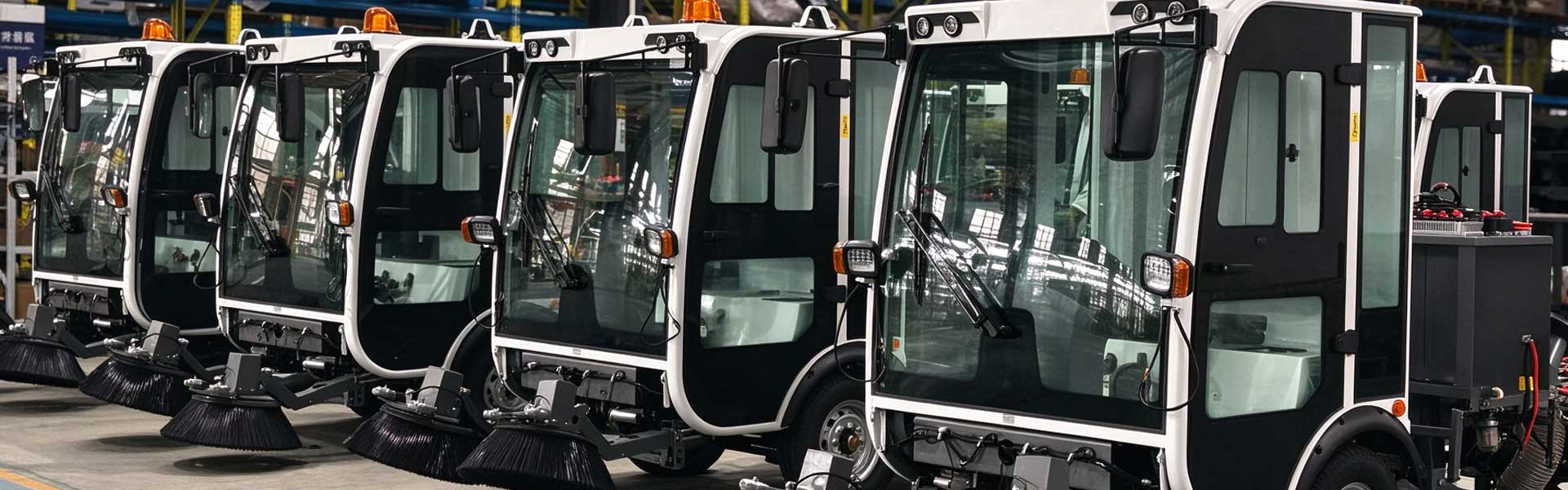
Importing an electric floor sweeper from China can give equipment distributors, cleaning companies, and industrial suppliers access to a range of machine configurations and purchasing options. However, a successful import depends on more than finding an attractive unit price.
Buyers need to confirm product suitability, supplier reliability, shipping arrangements, documentation, and after-sales support before placing an order. Asking the right questions early can reduce misunderstandings and help prevent costly purchasing mistakes.
1. Which Floor Sweeper Model Matches My Market?
Before contacting suppliers, identify the customers you intend to serve.
Small workshops may need compact walk-behind sweepers, while large warehouses and industrial facilities may prefer ride-on models with wider sweeping paths and larger waste hoppers.
Consider your target customers' floor areas, debris types, cleaning frequency, and available budgets.
When you import floor sweeper from China suppliers, provide these details and request model recommendations based on actual applications. Avoid selecting equipment solely because it has the widest working width or the lowest quoted price.
2. What Specifications Should I Confirm?
Request a complete specification sheet for each proposed model.
Important details include working width, cleaning productivity, hopper capacity, filtration system, battery type, charging requirements, dimensions, weight, and operating time.
Ask whether the quoted cleaning capacity represents a theoretical maximum or an estimate under typical working conditions.
For battery-powered equipment, confirm the supplied battery and charger configuration, including compatibility with the electrical supply in your destination country.
If the machine will be used for heavy debris, wet materials, or hazardous dust, explain the application and obtain written confirmation of suitability.
3. Is the Supplier Reliable?
Not every supplier offers the same level of product knowledge, quality control, and export support.
Ask how long the company has supplied floor cleaning equipment, which markets it serves, and what product documentation it can provide. Request current product photographs, operating videos, and a detailed quotation.
Where appropriate, request a video demonstration or arrange an inspection before shipment.
A professional China industrial floor sweeper supplier should answer technical and commercial questions clearly and identify any limitations of the proposed equipment.
Buyers should also clarify whether they are dealing with a manufacturer, trading company, or export supplier. Each business model can be suitable, but responsibilities for customization, quality control, and after-sales service should be clear.
4. What Is Included in the Quoted Price?
A low initial price does not always represent the lowest total purchasing cost.
Check whether the quotation includes the battery, charger, standard accessories, spare brushes, filters, and other components required for normal operation.
Confirm the trade terms, packaging, production lead time, payment schedule, and whether shipping costs are included.
For larger orders, request quantity-based pricing and check whether the same configuration will be supplied across all units.
If customization is required, ask whether it affects the price, delivery schedule, minimum order quantity, or warranty.
5. What Warranty and Spare Parts Support Are Available?
Floor sweepers contain consumable and serviceable components that may require replacement during normal use.
Ask about warranty coverage, exclusions, spare parts availability, maintenance instructions, and the process for handling technical problems.
Distributors should consider which replacement parts local customers are likely to need and whether they can order them separately.
Before importing a large quantity, confirm the supplier's approach to after-sales communication and how warranty claims are assessed.
6. Can the Supplier Provide Export Documents?
International buyers should confirm which documents are available for the specific machine and destination market.
Depending on the shipment and local requirements, these may include a commercial invoice, packing list, shipping documents, product manuals, and applicable conformity documentation.
If certification is required, verify that the documents cover the actual model and configuration being purchased. Do not assume that every machine from a supplier automatically carries the same certification.
Also check import duties, customs classification, local electrical requirements, and any country-specific product regulations with the appropriate authorities or customs broker.
7. How Will the Machines Be Packed and Shipped?
Before ordering, confirm the packaging method, unit dimensions, gross weight, loading arrangement, and shipping terms.
These details help importers estimate freight costs and determine how many units can fit into a shipment.
For wholesale purchases, establish a realistic delivery schedule and agree on the process for documenting any shipping damage or missing components.
Build a Better Import Purchasing Plan
When sourcing wholesale floor sweeper machines, buyers should compare suppliers using the same specifications and commercial conditions.
Prepare a checklist covering model suitability, technical specifications, included accessories, warranty, spare parts, documentation, packaging, lead time, and total landed cost.
A structured comparison makes it easier to identify the offer that best fits your customers and budget.
Request a Floor Sweeper Import Quotation
To obtain a relevant quotation, provide your target machine type, expected quantity, cleaning application, required specifications, and destination country.
If you are a distributor, explain your target market and whether you need multiple models or ongoing supply. This helps the supplier prepare a more suitable proposal.
Importing a floor sweeper from China can be a practical sourcing option when the equipment, supplier, and shipping arrangements are carefully evaluated. Confirming these details before payment helps establish clearer expectations and supports a more reliable purchasing process.