
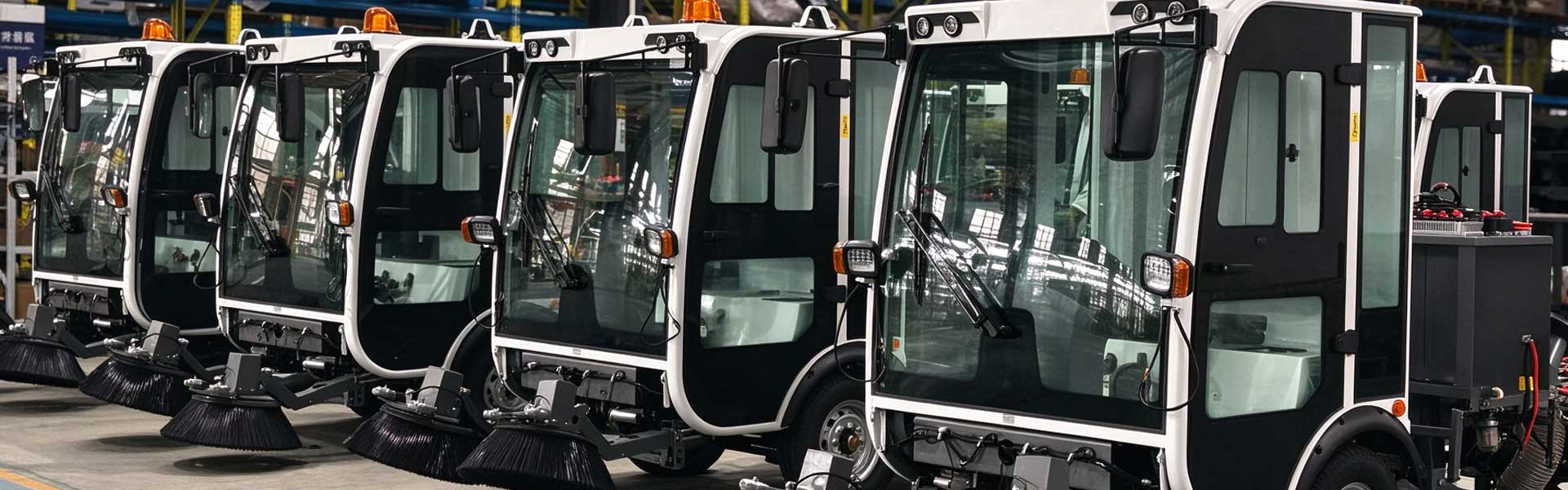
Bus depots and fleet garages need to keep large floor areas clean while vehicles move through maintenance bays, parking zones, and service lanes. Dust, sand, leaves, and other dry debris can accumulate quickly, making manual sweeping time-consuming for cleaning teams.
A commercial floor sweeper can help businesses maintain cleaner working areas and reduce the labor required for routine debris collection. For transport companies, fleet operators, cleaning contractors, and equipment distributors, selecting the right machine starts with understanding the size and conditions of the facility.
Why Bus Depots Need Commercial Floor Sweepers
Large vehicle facilities often contain long driving lanes, parking spaces, maintenance workshops, and vehicle staging areas. These spaces can generate substantial amounts of dust and debris during daily operations.
An electric floor sweeper is designed to collect suitable dry debris from compatible floor surfaces. Depending on the model, it may help with:
-
Sweeping bus parking areas and depot floors.
-
Removing dust and debris from fleet maintenance garages.
-
Cleaning workshop aisles and vehicle staging zones.
-
Maintaining warehouse areas attached to transport facilities.
-
Supporting routine cleaning schedules across large indoor spaces.
For facilities with extensive floor areas, a ride-on sweeper may reduce operator walking time and improve cleaning productivity compared with a small manual or walk-behind machine.
Choose a Floor Sweeper Based on Your Facility
The best model depends on the actual cleaning workload, floor layout, and type of debris.
Floor area: Estimate the total area that needs regular sweeping. A larger facility may benefit from a wider working path and greater debris collection capacity.
Indoor or outdoor use: Bus depots may include both enclosed garages and outdoor parking areas. Confirm that the selected machine is suitable for the intended environment and floor conditions.
Debris type: Dust, sand, leaves, and heavier workshop debris place different demands on sweeping equipment. Explain the debris your team encounters most frequently.
Maneuverability: Maintenance garages may contain vehicle lifts, pillars, parked buses, and narrow service lanes. Check machine dimensions and turning requirements before purchasing.
Operating time: Consider the required cleaning duration, battery capacity, charging arrangements, and expected daily workload.
Dust control: If fine dust is a concern, ask about the machine's dust-control and filtration options. Confirm their suitability for your facility.
These factors can help buyers narrow their choices without paying for capacity or features that are unnecessary for the application.
Walk-Behind or Ride-On Floor Sweeper?
A walk-behind floor sweeper can be suitable for smaller garages, compact maintenance areas, and locations where operators need to maneuver around obstacles frequently.
A ride-on floor sweeper may be a better fit for large depots with long cleaning routes and extensive open floor space. It can allow operators to cover larger areas while remaining seated, subject to the machine's working width, travel speed, and actual operating conditions.
For mixed facilities, consider whether one machine can handle the main cleaning routes or whether separate equipment is needed for large open areas and confined spaces.
Buying Floor Sweepers for Multiple Locations
Fleet operators managing several depots may benefit from standardizing equipment where cleaning conditions are similar. Consistent models can simplify operator training, maintenance planning, and spare-parts purchasing.
When contacting a commercial floor sweeper supplier, provide the facility area, floor surface, debris type, working hours, and indoor or outdoor requirements.
Businesses comparing an industrial floor sweeper for sale should request detailed specifications, including working width, theoretical cleaning capacity, debris hopper capacity, battery configuration, filtration options, and machine dimensions.
For distributors and contractors supplying several sites, floor sweeper wholesale purchasing may support fleet expansion and repeat business. Confirm the model configuration, order quantity, warranty, packaging, lead time, and after-sales support before placing a large order.
Compare Total Purchasing Value
The initial purchase price is only one part of the decision. Battery replacement, brushes, filters, maintenance access, operator training, and spare-parts availability may also affect long-term ownership costs.
International buyers should check voltage and charging arrangements where applicable, export packaging, delivery terms, and documentation. For equipment intended for outdoor work, confirm the manufacturer's recommendations for weather exposure and operating conditions.
A supplier who can clearly explain model differences makes it easier to select a practical machine for the facility rather than relying on advertised cleaning capacity alone.
Request a Floor Sweeper Quotation
To receive a suitable recommendation, provide your depot's floor area, surface type, typical debris, cleaning frequency, and preferred machine configuration.
If you are purchasing for several locations, include the estimated quantity and any requirements for standardized models. This information helps suppliers recommend appropriate equipment for bus depots, fleet garages, and vehicle maintenance facilities while keeping the investment aligned with your cleaning workload.