
Retail stores need clean customer-facing areas, but backrooms and stockrooms also require regular floor maintenance. Cardboard fragments, dust, packaging scraps, and debris from incoming deliveries can accumulate in areas where staff receive, unpack, and store merchandise.
For supermarket operators, retail chains, warehouse-style stores, and facility management companies, a suitable floor sweeper can help maintain these working areas as part of a routine cleaning program.
The best choice depends on the size of the backroom, the layout of storage aisles, the type of debris, and how often the area needs cleaning.
Match the Floor Sweeper to Your Stockroom Layout
Retail backrooms vary in size and arrangement. A small shop may have a compact stockroom with narrow passages, while a supermarket or large retail outlet may operate a much larger receiving and storage area.
When evaluating a commercial floor sweeper for sale, begin by measuring the areas that need regular cleaning.
Consider whether the machine must move between shelving, pallets, receiving areas, and employee walkways. Maneuverability may be more important than maximum cleaning width in a crowded stockroom.
For larger backrooms with wide aisles, a higher-capacity sweeper may reduce the time required to cover the floor. However, buyers should confirm that the machine can turn comfortably within the available space.
Choose the Right Sweeper for Daily Retail Operations
The most suitable configuration depends on the cleaning area and operating schedule.
Compact and walk-behind models may be appropriate for smaller stockrooms, narrow aisles, and localized cleaning tasks.
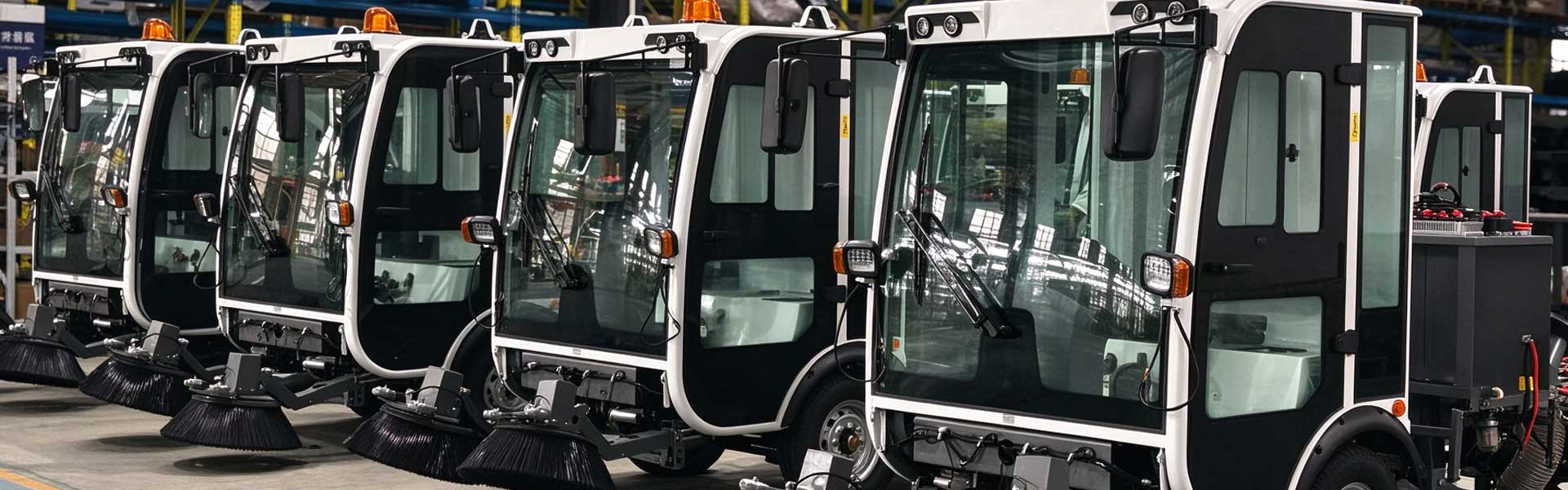
Ride-on sweepers may suit larger retail warehouses, supermarket backrooms, and distribution areas with extensive open floor space.
Before purchasing, evaluate the following:
-
Cleaning width and expected area coverage
-
Machine dimensions and turning requirements
-
Dust and debris collection capability
-
Waste container capacity
-
Battery runtime and charging arrangements
-
Noise considerations during business hours
-
Storage space and maintenance requirements
The rated cleaning efficiency should be treated as a comparison figure rather than a guaranteed real-world result. Shelving, pallets, obstacles, and frequent stops can reduce actual productivity.
Keep Packaging Debris Under Control
Retail stockrooms often accumulate lightweight debris from cartons, plastic packaging, labels, and other materials used during receiving and replenishment.
A suitable sweeper can help collect routine loose debris and support more organized working conditions.
However, buyers should confirm the machine's intended debris types and operating conditions. Some lightweight packaging materials may require particular attention to brush design, collection performance, or dust-control arrangements.
For sites that also experience frequent spills or require removal of adhered dirt, a floor scrubber may be more suitable for those separate cleaning tasks. A sweeper and a scrubber perform different functions, so the choice should reflect the actual floor maintenance requirements.
Find a Warehouse Floor Sweeper Supplier
For businesses sourcing equipment for one store or multiple retail locations, a reliable warehouse floor sweeper supplier can help compare available configurations.
When requesting product information, provide the stockroom dimensions, floor type, typical debris, aisle width, and preferred operating configuration.
For multi-site retailers, standardizing equipment models where practical may simplify staff familiarization, routine maintenance, and the purchasing of consumable parts.
Retail equipment distributors should also identify the intended customer segment before building inventory. Compact models and larger warehouse sweepers may serve different markets and price points.
Compare the Total Purchasing Requirements
The initial machine price is important, but it should not be the only factor in the decision.
When comparing the retail floor cleaning machine price, review the machine configuration, battery and charger, included accessories, warranty coverage, spare parts availability, packaging, and shipping costs.
For international orders, verify voltage and charging compatibility, delivery arrangements, and the import documentation required in the destination country.
If purchasing equipment for several retail locations, ask whether the supplier can quote the requested quantity and confirm the configuration of every included unit.
Request a Floor Sweeper Quotation
Voril supports B2B buyers seeking electric floor sweepers and scrubbers for commercial and industrial cleaning applications.
To request suitable product options, provide the approximate stockroom area, aisle width, floor surface, common debris types, daily cleaning frequency, and destination country.
If you are purchasing for multiple retail stores or supplying cleaning equipment to retail customers, include the estimated quantity and any preferred machine dimensions.
With clear application details, you can compare available models and choose a floor sweeper that fits your stockroom layout and routine cleaning requirements.