
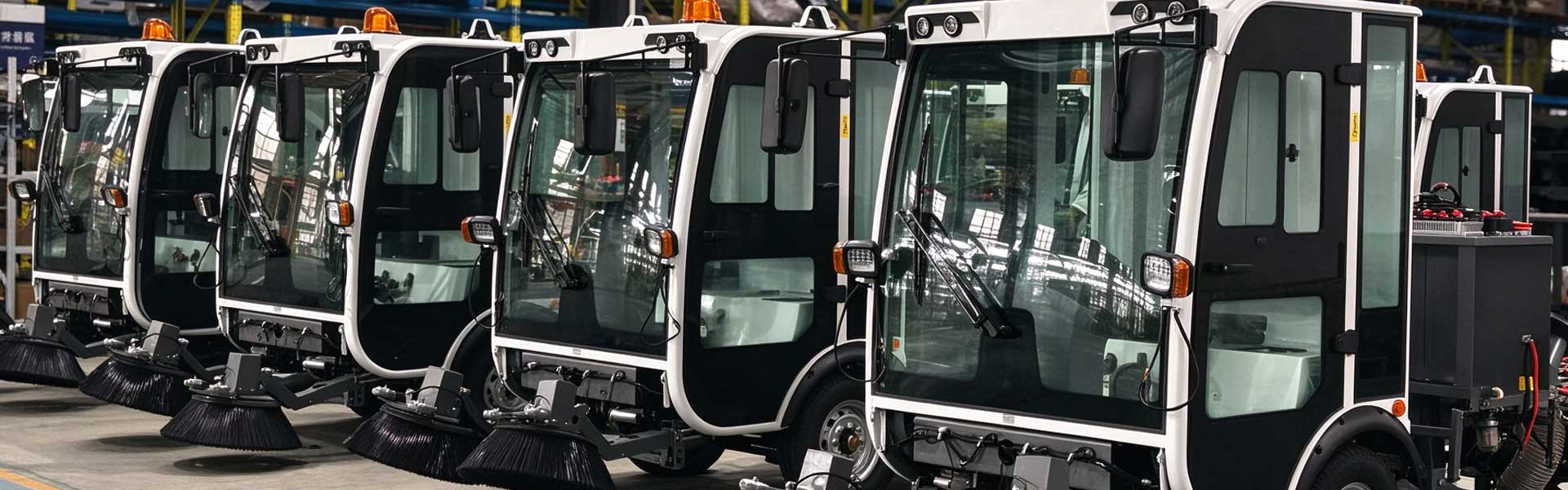
Construction supply yards and building material depots often have large areas that require regular cleaning. Dust, packaging scraps, sand, and other loose debris can accumulate around storage zones, loading areas, vehicle routes, and material handling spaces.
For building material wholesalers, construction supply companies, and industrial facility managers, a suitable floor sweeper can help maintain cleaner working areas while reducing the need for manual sweeping across extensive outdoor or semi-outdoor surfaces.
Choosing the right machine depends on the site layout, type of debris, cleaning frequency, and the amount of ground that must be covered.
Why Use a Floor Sweeper in a Construction Supply Yard?
Construction supply yards may contain warehouses, open storage areas, loading bays, and traffic routes used by delivery vehicles and material handling equipment.
Cleaning needs can vary significantly between these areas. Indoor warehouse floors may collect cardboard, dust, and packaging waste, while outdoor paved surfaces may accumulate sand, leaves, and larger loose debris.
An appropriate sweeper can help collect this material and support routine site maintenance.
For buyers looking for an industrial floor sweeper for sale, the first step is to identify the main surfaces and debris types encountered during normal operations.
A machine designed primarily for smooth indoor floors may not be suitable for every outdoor yard. Surface conditions, debris size, dust control, and the manufacturer's operating recommendations should all be considered.
Select a Sweeper for Your Site Size
The size of the cleaning area is an important factor when choosing equipment.
Smaller yards or restricted storage zones may be adequately served by compact equipment, while large building material depots may benefit from ride-on sweepers designed for more extensive cleaning operations.
When comparing models, consider:
-
Total area requiring routine cleaning
-
Required cleaning frequency and available working time
-
Indoor, outdoor, or mixed operating environments
-
Typical debris size and quantity
-
Surface condition and floor unevenness
-
Available storage and charging space
-
Operator visibility and maneuverability
The manufacturer's stated cleaning efficiency can help with initial comparisons, but actual productivity depends on the layout, debris conditions, operator practices, and the frequency of stops for emptying and maintenance.
Choose Equipment for Dust and Loose Debris
Construction supply yards can generate fine dust as well as larger pieces of packaging and other loose material.
Buyers should ask the outdoor floor sweeper supplier about the machine's intended surfaces, dust-control configuration, filtration system, and supported debris types.
For sites with substantial fine dust, dust suppression or suitable filtration may be particularly important. The appropriate system depends on the application and local environmental requirements.
For heavier debris or rough outdoor surfaces, confirm whether the selected model is designed to handle those conditions. A sweeper should not be assumed suitable for wet mud, large construction waste, or uneven ground unless the manufacturer specifies that capability.
Compare Ride-On and Walk-Behind Sweepers
Walk-behind sweepers can be suitable for smaller zones, narrow passages, and localized cleaning tasks. They may be useful where a large ride-on machine cannot maneuver easily.
Ride-on sweepers can be more practical for larger yards where operators need to cover extensive paved areas during scheduled cleaning periods.
For facility managers, the decision should reflect the area size, operating conditions, and available budget rather than machine size alone.
Businesses with several distinct cleaning zones may also consider different equipment types for indoor warehouses and outdoor paved areas.
Work With a Commercial Floor Sweeper Supplier
A suitable commercial floor sweeper quotation should identify the model, cleaning width, rated cleaning efficiency, waste container capacity, power configuration, and applicable operating conditions.
Buyers should also review warranty terms, consumable parts, battery and charger specifications, shipping arrangements, and after-sales support.
For overseas purchases, provide the destination country and intended application so the supplier can help identify suitable equipment options.
If the yard includes both indoor and outdoor spaces, describe each area separately. This helps prevent selecting a machine based on conditions that represent only part of the site.
Request a Floor Sweeper Quotation
Voril supplies electric floor cleaning equipment for commercial and industrial applications, including floor sweepers and floor scrubbers.
To help identify suitable models for your construction supply yard, please provide the approximate cleaning area, surface type, typical debris, preferred machine configuration, and destination country.
For larger facilities, include your estimated daily cleaning schedule and any special dust-control requirements.
With these details, your business can compare suitable options and select a floor sweeper that better matches the actual demands of your yard.