
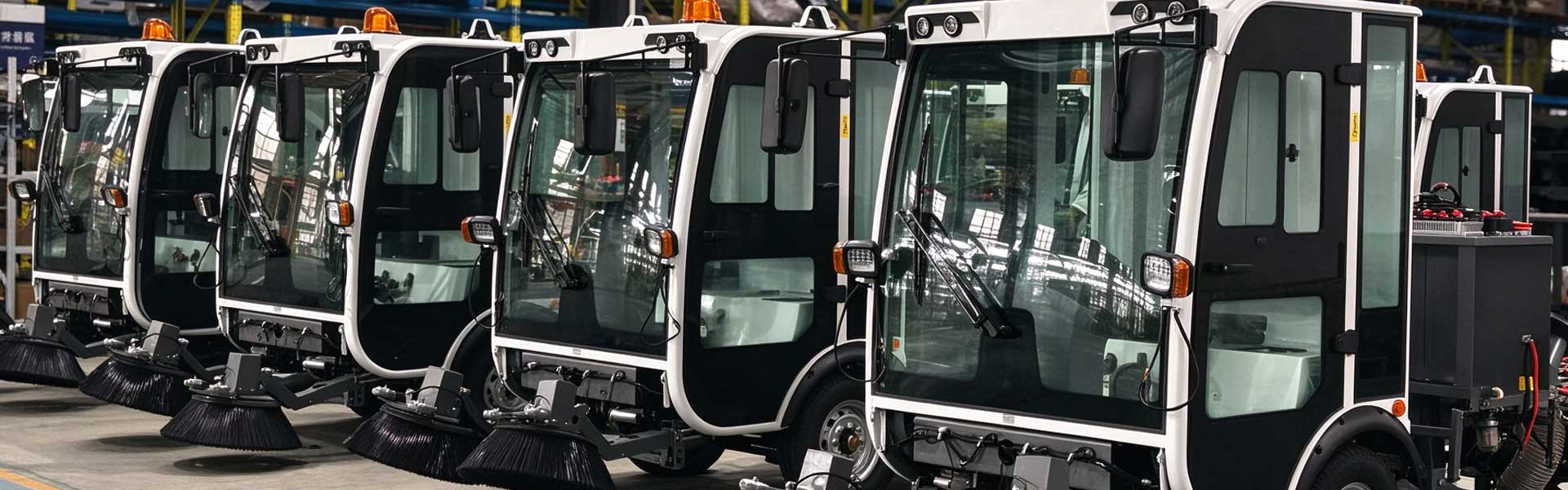
Manufacturing plants, warehouses, workshops, and industrial facilities often deal with dust, packaging scraps, metal fragments, and other debris generated during daily operations. When these materials accumulate across large floor areas, manual sweeping can require considerable time and labor.
A suitable industrial floor sweeper helps businesses maintain cleaner working areas and organize routine cleaning more efficiently. For facility managers, equipment distributors, and industrial buyers, the key is choosing a machine that matches the type of debris, floor conditions, and cleaning workload.
What Type of Industrial Floor Sweeper Do You Need?
Different industrial environments produce different types and quantities of debris. Before purchasing equipment, identify the materials that need to be collected and how frequently the floors require cleaning.
A floor sweeper may be suitable for collecting dry dust, loose dirt, packaging waste, and other debris within its rated application. However, heavy metal pieces, long strips of material, wet waste, and hazardous substances may require specialized handling or equipment designed for those conditions.
Typical applications include:
-
Manufacturing floors with regular dust and production debris.
-
Warehouses handling cartons, pallets, and packaging materials.
-
Automotive workshops with compatible dry debris.
-
Industrial distribution centers with large traffic areas.
-
Loading zones and storage facilities requiring routine sweeping.
If the debris includes sharp fragments, oily residues, or combustible dust, confirm equipment suitability with the supplier before purchasing.
How to Select a Heavy-Duty Floor Sweeper
When comparing a heavy duty industrial floor sweeper for sale, consider the following purchasing factors.
Cleaning Width and Productivity
A wider sweeping path can help cover large open areas more quickly, depending on the machine's actual operating speed and working conditions.
Smaller walk-behind machines may be practical for compact workshops, narrow passages, and areas with obstacles. Ride-on models can be more suitable for extensive warehouse floors and large industrial facilities.
Do not select a machine based solely on its maximum theoretical cleaning capacity. Real productivity also depends on turning, debris volume, floor layout, and the time needed to empty the waste hopper.
Debris Collection Capacity
Consider how much waste accumulates during a normal cleaning cycle. A larger hopper may reduce emptying interruptions, while a smaller machine may be easier to maneuver in restricted spaces.
Ask the supplier how the machine handles the specific debris found at your facility and whether additional filters or accessories are required.
Floor Conditions
Check whether the working surface is smooth concrete, rough concrete, coated flooring, or another material. Floor irregularities, slopes, thresholds, and narrow passages can influence equipment selection.
Battery and Operating Time
For battery-powered sweepers, compare expected operating time, charging arrangements, and the cleaning schedule. Facilities operating several shifts may need a different battery or charging plan from businesses cleaning once per day.
Why Businesses Purchase Industrial Sweeping Equipment
A suitable floor sweeper can reduce the time employees spend on routine sweeping and help maintain more consistent cleaning schedules.
In warehouses, cleaner floors can make routine inspections and material movement easier. In manufacturing facilities, regular debris collection can help keep work areas organized.
For companies managing multiple sites, standardizing on compatible equipment may also simplify operator training, maintenance planning, and spare parts purchasing.
The best results come from matching the machine to the facility rather than assuming the largest or most expensive model is always the best choice.
Source Equipment from an Industrial Floor Sweeper Supplier
A dependable industrial floor sweeper supplier should help buyers compare models according to cleaning requirements, machine dimensions, and operating conditions.
Before ordering, request details about:
-
Working width and estimated cleaning productivity.
-
Hopper capacity and debris compatibility.
-
Filtration system and dust-control features.
-
Battery specifications and operating time.
-
Machine dimensions and turning requirements.
-
Warranty, spare parts, and maintenance support.
-
Packaging, delivery, and export documentation.
For distributors and importers, compare available models, minimum order quantities, and volume pricing. Clear product specifications and consistent supplier communication are especially useful when supplying equipment to multiple industrial customers.
A factory floor sweeping machine should be evaluated according to the debris it can safely collect, the floor area it needs to cover, and the operating schedule it must support.
Request a Quotation for Your Industrial Facility
To receive an appropriate recommendation, provide the floor area, floor type, debris description, cleaning frequency, preferred machine type, and destination country.
For particularly heavy or unusual debris, share photographs and describe the material before selecting a model.
Choosing the right industrial floor sweeper can help businesses improve routine cleaning efficiency and maintain more organized facilities. A clear assessment of the application, combined with a suitable equipment specification, provides a stronger basis for purchasing decisions.