
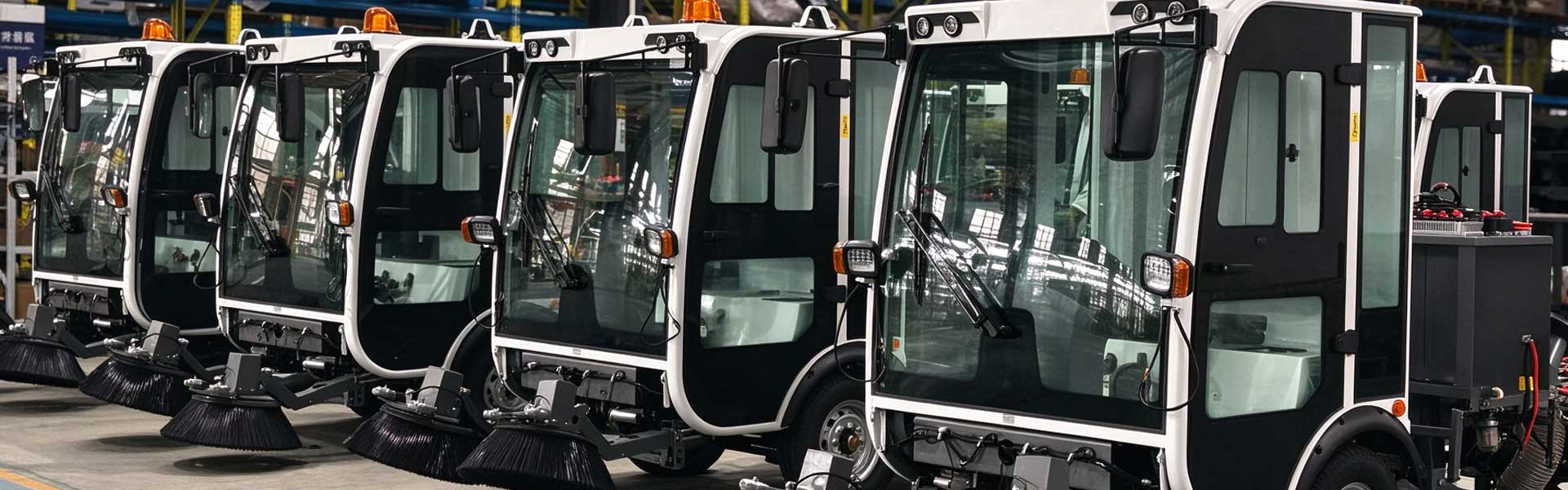
Commercial cleaning teams need equipment that can remove dust, dirt, packaging debris, and other loose waste from floors efficiently. For warehouses, shopping centers, parking facilities, workshops, and commercial buildings, a battery-powered floor sweeper can reduce the time and labor required for routine sweeping.
Unlike equipment that depends on a continuous external power connection, a battery-powered sweeper can move freely around the cleaning area. This makes it a practical option for businesses that need regular cleaning across large indoor spaces or designated outdoor hard-surface areas.
For equipment distributors, cleaning contractors, and facility managers, selecting the right model means matching cleaning capacity, runtime, machine size, and purchase cost to the actual application.
Why Choose a Battery-Powered Floor Sweeper?
Manual sweeping may be sufficient for small areas, but it becomes less practical when cleaning large floors every day. A powered sweeper uses rotating brushes to collect loose debris, helping operators cover larger areas with less repetitive physical work.
Battery-powered models are particularly useful in locations where maneuverability and freedom from trailing power cables matter. Depending on the design, buyers can choose walk-behind or ride-on models for different cleaning workloads.
For indoor applications, buyers should also review noise levels, dust-control arrangements, and the machine's ability to maneuver around shelves, equipment, and pedestrian areas.
How to Choose the Right Sweeper
Cleaning area: Estimate the total floor area that must be cleaned and the time available for each cleaning session. Larger facilities may benefit from a wider working path or a ride-on model.
Battery runtime: Consider how long the machine needs to operate between charging sessions. Compare the manufacturer's stated runtime with your planned workload, allowing for stops, turns, obstacles, and operating conditions.
Cleaning width and productivity: A wider cleaning path may improve productivity in open spaces, but a compact machine can be more practical in narrow aisles and crowded areas.
Debris and floor conditions: Identify whether the machine will collect fine dust, ordinary dirt, leaves, packaging debris, or mixed waste. Brush configuration and dust-control features should match the intended environment.
Maintenance and support: Check brush replacement, filter maintenance, battery availability, spare parts, and warranty coverage before purchasing.
Walk-Behind or Ride-On Floor Sweeper?
Walk-behind sweepers can suit small warehouses, workshops, retail backrooms, and facilities with limited storage space. They are generally easier to position in tighter areas and may be appropriate for businesses with moderate daily cleaning requirements.
Ride-on sweepers are worth considering when operators must cover extensive open floors, such as logistics centers, manufacturing plants, parking structures, or large commercial facilities. They can help reduce operator fatigue during longer cleaning sessions.
The best choice depends on the cleaning area, layout, debris load, working hours, and available budget rather than machine size alone.
Finding a Commercial Floor Sweeper Supplier
A reliable battery powered floor sweeper supplier should help buyers compare models according to real cleaning requirements.
When evaluating a commercial electric floor sweeper for sale, request information about cleaning width, theoretical cleaning productivity, battery type, charging time, waste container capacity, filter configuration, dimensions, and operating weight.
Buyers should also distinguish between theoretical productivity and practical results. Actual cleaning output depends on obstacles, floor conditions, debris volume, operator experience, and the number of passes required.
For distributors and cleaning equipment dealers, a supplier that offers multiple machine sizes may make it easier to serve customers with different facility requirements.
Wholesale Purchasing for Cleaning Equipment Businesses
A floor sweeper wholesale arrangement may suit importers, regional dealers, facility service companies, and commercial cleaning equipment distributors.
Before ordering, provide the supplier with your target applications, expected order quantity, destination country, preferred battery configuration, and any branding or packaging requirements.
For international purchases, confirm shipping dimensions, export documentation, lead time, warranty terms, spare parts availability, and electrical charging compatibility.
If you intend to resell the equipment, request product specifications, operation manuals, maintenance information, and marketing materials that can support your sales team.
Request a Battery-Powered Floor Sweeper Quote
A battery-powered floor sweeper can help commercial facilities improve routine cleaning efficiency while reducing dependence on manual sweeping.
To identify the right model, share your floor area, surface type, debris conditions, daily cleaning schedule, and preferred machine style with a supplier. Comparing these requirements with machine specifications will help you choose equipment that fits your cleaning workload and budget.