
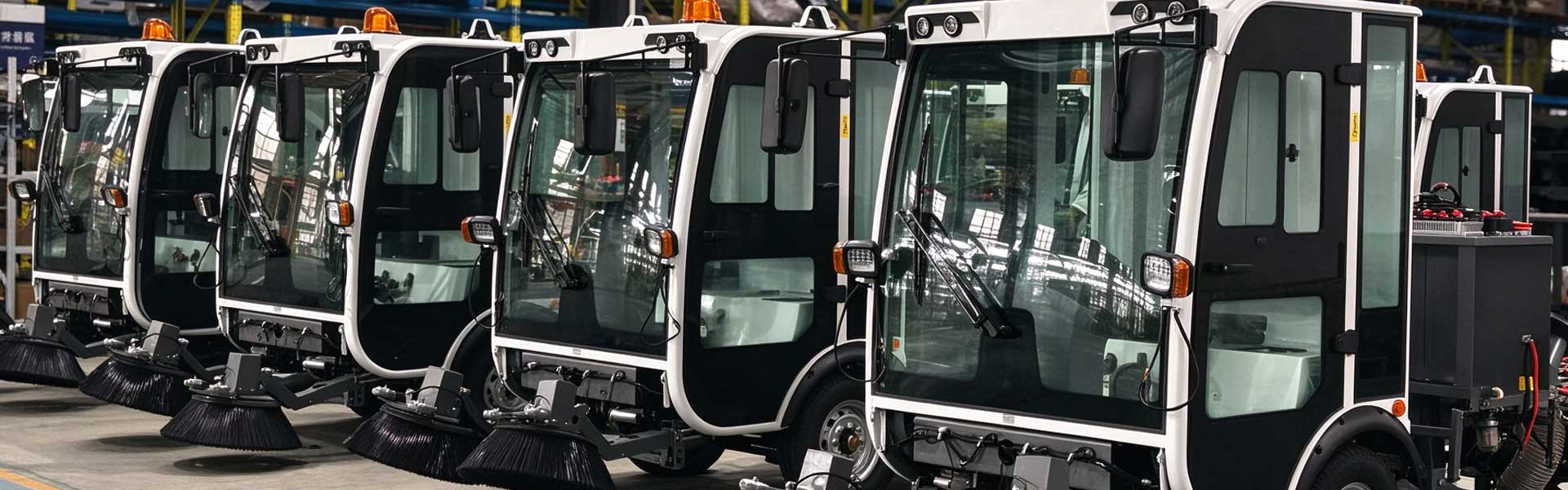
High-traffic facilities accumulate dust and debris throughout the day. Warehouses receive deliveries, factories generate production waste, shopping centers experience constant foot traffic, and parking facilities collect dirt carried in by vehicles.
For these environments, manual sweeping can require substantial time and labor. A commercial floor sweeper offers a more efficient way to collect loose debris and maintain cleaner floors between scheduled deep-cleaning operations.
Facility managers, cleaning contractors, and equipment distributors should choose a sweeper based on the size of the area, the type of debris, the layout, and the frequency of cleaning.
What Makes High-Traffic Cleaning Different?
Busy facilities rarely have perfectly open floors. Operators may need to clean around shelving, machinery, pallets, vehicles, customers, or other workers.
The equipment must therefore balance cleaning productivity with maneuverability. A large machine may be suitable for an open distribution center but inconvenient in a crowded retail environment. Conversely, a compact sweeper may require too much time to cover a large factory floor.
Buyers should also consider whether cleaning takes place during working hours, overnight, or during scheduled shutdowns. This affects the required operating speed, machine capacity, and acceptable noise level.
Choose a Sweeper Based on Your Facility
Warehouses and logistics centers: These facilities may need to collect dust, cardboard fragments, and packaging debris across extensive floor areas. A ride-on sweeper can be suitable for open aisles and large storage zones.
Manufacturing plants: Buyers should identify the type of debris produced during manufacturing. Fine dust, larger particles, and mixed debris may require different brush and filtration arrangements.
Shopping centers and commercial buildings: Maneuverability, noise, storage space, and safe operation around pedestrians are important considerations. Compact or walk-behind equipment may suit smaller sections, while larger open areas may justify a ride-on machine.
Parking garages and covered facilities: Buyers should assess floor surface, dust conditions, ramps, and turning space. Outdoor or semi-outdoor applications may also require equipment designed for the relevant environmental conditions.
Cleaning contractors: Contractors serving multiple customer sites may prefer a product range that includes compact models for smaller locations and higher-capacity machines for larger facilities.
Walk-Behind or Ride-On: Which Is Better?
Walk-behind sweepers are often suitable for small and medium-sized areas, narrow passages, and facilities where storage space is limited. They can be a practical choice for workshops, small warehouses, and retail backrooms.
Ride-on sweepers are designed to help operators cover larger areas with less walking. They may be more suitable for distribution centers, industrial plants, large parking facilities, and other extensive spaces.
When comparing options, consider the cleaning path width, waste hopper capacity, battery runtime, maneuverability, and expected cleaning time. The largest model is not necessarily the most economical choice if much of the facility consists of narrow aisles.
Important Features to Check Before Buying
When reviewing an industrial floor sweeper for sale, buyers should request specifications covering cleaning width, cleaning productivity, waste container capacity, filter type, battery performance, dimensions, and operating weight.
Ask whether the stated productivity figure is theoretical or based on practical operating conditions. Actual results will vary depending on obstacles, turning frequency, debris volume, and floor condition.
For dusty indoor environments, pay particular attention to the dust-control system and filter maintenance requirements. For larger facilities, consider battery charging time and the availability of replacement batteries.
Buyers should also check brush availability, maintenance access, spare parts, warranty terms, and the supplier's after-sales arrangements.
How to Compare Floor Sweeper Prices
The ride on floor sweeper price depends on factors such as machine size, cleaning width, battery configuration, waste capacity, filtration system, and included features.
When comparing quotations from a commercial floor sweeper supplier, make sure the specifications are equivalent. A lower-priced machine may have a smaller cleaning path, shorter runtime, or a different configuration.
Calculate the overall purchasing cost by considering expected usage, routine maintenance, consumables, battery replacement, and service support. For businesses operating several machines, these ongoing costs can influence the long-term value of the investment.
Wholesale Options for Equipment Dealers
Cleaning equipment distributors and importers may benefit from sourcing multiple sweeper models from one supplier. A product range covering different cleaning capacities can help dealers serve small businesses, industrial customers, and large commercial facilities.
Before placing a wholesale order, confirm the model specifications, minimum order requirements if applicable, lead time, export packaging, documentation, and spare parts support.
Providing information about the target market and typical customer applications can help the supplier recommend a suitable product mix.
Get a Floor Sweeper Quotation
Choosing the right floor sweeper begins with understanding the facility's cleaning workload, floor layout, debris conditions, and available operating time.
Whether you need a compact walk-behind sweeper or a larger ride-on machine, request a quotation based on your actual requirements. Compare cleaning performance, battery runtime, maintenance needs, warranty coverage, and total purchasing cost before making your final decision.