
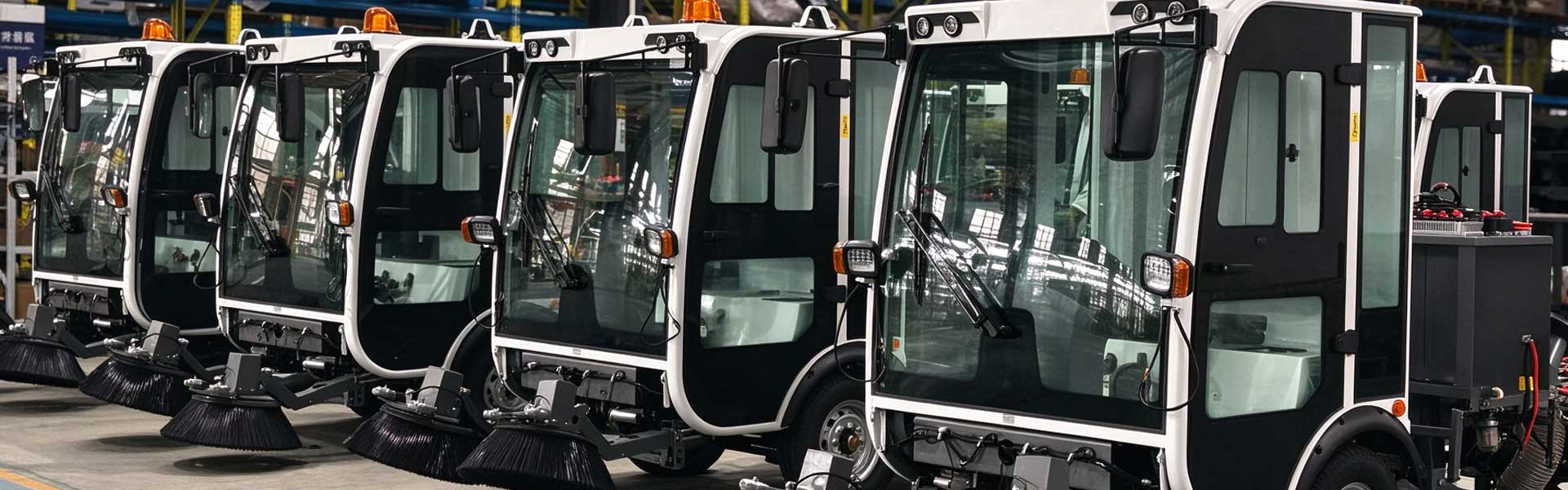
Manufacturing workshops experience continuous foot traffic, material movement, and equipment operation. Dust, dirt, packaging debris, and certain types of process residue can accumulate on floors, making regular cleaning an important part of factory maintenance.
For factory managers, production facility operators, cleaning contractors, and industrial equipment distributors, choosing a suitable floor scrubber can help make routine cleaning more efficient and manageable.
The right machine depends on the type of contamination, floor surface, workshop layout, and cleaning schedule.
Why Manufacturing Workshops Need Floor Scrubbers
Factory floors can become dirty quickly, particularly in areas where employees move between production lines, storage zones, and dispatch areas.
A suitable industrial floor scrubber can help clean compatible hard-floor surfaces by applying cleaning solution, scrubbing the floor, and collecting wastewater in one operation.
Typical applications include:
-
Production workshop floors
-
Factory corridors and internal walkways
-
Assembly and packaging areas
-
Warehouses connected to manufacturing facilities
-
Finished-goods storage and dispatch zones
Machine cleaning may help reduce the time spent on routine floor maintenance compared with manual methods over larger areas. However, cleaning equipment must be matched to the actual contamination and workplace conditions.
Walk-Behind or Ride-On Floor Scrubber?
The choice between walk-behind and ride-on equipment is one of the main purchasing decisions.
A walk-behind machine may be suitable for small or medium-sized workshops, narrow aisles, and areas containing numerous obstacles. It generally offers a practical balance between cleaning performance and maneuverability.
A ride-on scrubber may be more appropriate for larger production floors and open warehouse areas where operators need to cover substantial distances regularly.
Before selecting an industrial floor scrubber for sale, evaluate the cleaning width, tank capacity, machine dimensions, battery runtime, and expected productivity.
A machine that is too large may struggle in narrow aisles, while a small model may require too many passes to clean a large workshop within the available time.
Match the Machine to Factory Floor Conditions
Manufacturing facilities can have very different floor surfaces, including sealed concrete, epoxy-coated floors, and other industrial finishes.
Buyers should explain the floor material and the type of dirt that needs to be removed. Ordinary dust and light dirt may be suitable for routine scrubbing, while heavy oil, grease, sticky residues, or specialized industrial contamination may require pretreatment or a different cleaning process.
For example, conductive carbon-black contamination on an epoxy floor requires particular attention to the coating manufacturer's cleaning recommendations and the site's contamination-control procedures. A standard scrubber should not be assumed to remove every type of industrial residue effectively.
Choose compatible brushes or pads and confirm the recommended cleaning chemicals. If the workshop handles combustible dust, hazardous substances, or potentially explosive atmospheres, consult the site's safety requirements before selecting or operating any powered cleaning equipment.
Calculate Cleaning Productivity
Cleaning width and rated productivity are useful comparison points, but real-world performance also depends on obstacles, floor condition, operator experience, and time spent refilling or emptying tanks.
To select an appropriate factory floor cleaning machine, estimate the total floor area, the available cleaning window, and the frequency of cleaning.
For example, a workshop that must be cleaned during a short shift change may need a different machine from a facility where cleaning can continue throughout the day.
Also consider charging arrangements, access to water, wastewater disposal, storage space, and operator training. These practical details can affect whether a machine works well in daily operations.
What to Check Before Purchasing
Industrial buyers should compare specifications and service arrangements rather than focusing exclusively on the initial price.
Important purchasing considerations include:
-
Cleaning width and rated productivity
-
Solution and recovery tank capacity
-
Battery type, runtime, and charging requirements
-
Machine dimensions and turning space
-
Brush or pad compatibility
-
Warranty coverage and spare-parts availability
For overseas buyers, confirm voltage-related charging requirements where applicable, shipping dimensions, packaging, export documentation, and local compliance needs.
If you are a distributor or wholesaler, request information about available models and order quantities so you can compare options for different customer applications.
Request an Industrial Floor Scrubber Quote
A suitable scrubber can help manufacturing facilities maintain cleaner floors and organize routine maintenance more efficiently. Successful selection begins with understanding the floor surface, contamination type, workshop layout, and cleaning schedule.
Contact Voril with your factory floor area, floor material, cleaning requirements, and destination country. Our team can help you compare available models and request a quotation for your manufacturing or distribution business.