
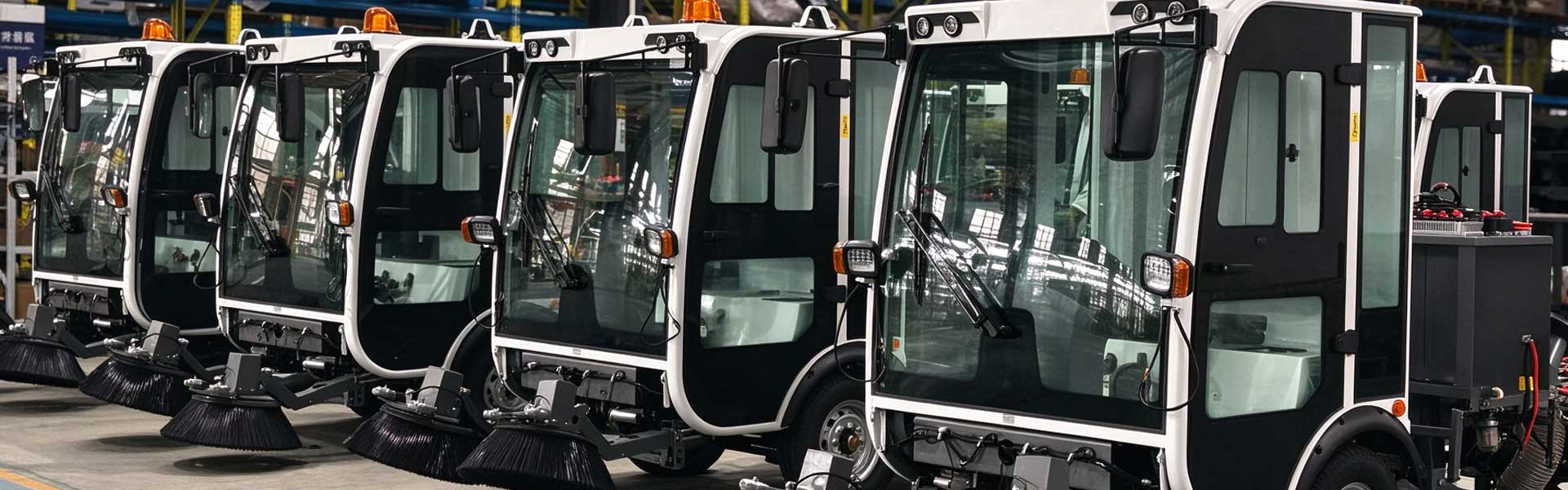
Professional cleaning contractors, commercial property operators, industrial facility managers and equipment distributors often need efficient solutions for maintaining large floor areas. An electric ride-on floor sweeper is designed for operators who need to collect dust, loose debris and everyday floor waste across warehouses, parking facilities, factories and commercial buildings.
Unlike small manual cleaning equipment, a ride-on machine allows operators to cover larger working areas while remaining seated during operation.
Businesses searching for an electric ride-on floor sweeper for sale should compare the machine's cleaning width, debris hopper, operating time and maneuverability with the actual conditions of the facilities they maintain.
Why Professional Cleaning Businesses Choose Ride-On Sweepers
Cleaning large commercial and industrial floors can involve substantial daily work.
A warehouse may accumulate packaging debris, dust and loose materials. A manufacturing plant may need regular collection of production waste. A shopping facility may require scheduled cleaning across corridors, service areas and parking spaces.
A ride-on sweeper can support these operations by combining operator movement, sweeping and debris collection in one machine.
Typical applications include:
Warehouses and distribution centers: Cleaning dust and loose packaging materials from large floor areas.
Manufacturing facilities: Collecting suitable loose debris from production and storage areas.
Shopping centers: Maintaining internal service corridors and other suitable hard-floor areas.
Parking facilities: Removing dust, leaves and everyday debris from appropriate surfaces.
Logistics facilities: Supporting regular cleaning in loading, sorting and circulation areas.
The selected machine must be suitable for the debris type and floor conditions. It should not be assumed that every sweeper can collect heavy industrial waste or hazardous materials.
Choosing the Right Ride-On Sweeper Configuration
A professional buyer should consider several factors before requesting a quotation.
Cleaning Width and Productivity
Cleaning width affects how much floor area the machine can cover during each pass.
For example, buyers may compare machines with approximately 800 mm, 1,000 mm or 1,300 mm working widths, depending on the available product range and configuration.
A wider cleaning path may be useful in open warehouses and parking areas.
However, a large machine may be less convenient in narrow aisles, crowded production spaces or facilities with many obstacles.
The actual cleaning result also depends on operator speed, floor conditions, turning frequency and debris volume.
Debris Hopper Capacity
The hopper collects the debris during operation.
A larger hopper can reduce the frequency of emptying when the machine operates across large areas or handles substantial amounts of loose waste.
Buyers should consider the type and density of the debris, not just the hopper's nominal volume.
A machine used mainly for light dust may have different requirements from one handling packaging scraps and leaves.
Battery and Operating Time
Battery-powered sweepers are useful in many indoor commercial and industrial environments.
Buyers should compare battery specifications, charging time and expected operating duration.
For facilities with long cleaning schedules, battery capacity and charging arrangements deserve particular attention.
The selected model should support the planned daily workload without creating unnecessary interruptions.
Machine Dimensions and Maneuverability
Cleaning contractors often operate in different customer facilities.
A machine that works well in a spacious warehouse may be unsuitable for a compact shopping facility.
Before ordering, compare the machine's overall dimensions, turning requirements, operating controls and access through doors or passages.
This is especially important when purchasing several machines for different cleaning projects.
Commercial Value for Cleaning Contractors
An appropriate ride-on sweeper can help professional cleaning companies organize their labor and equipment deployment.
Operators can cover larger floor areas without relying entirely on manual sweeping.
This may be particularly useful for contractors managing multiple warehouses, commercial properties or industrial facilities.
The machine can also help standardize cleaning procedures across different customer locations.
For equipment rental companies, offering several machine sizes may allow them to serve customers with different facility dimensions and cleaning requirements.
Distributors can also develop a broader equipment portfolio by offering both walk-behind and ride-on sweepers.
The key is to match machine capability with actual cleaning conditions rather than purchasing the largest model available.
Finding a Suitable Commercial Facility Cleaning Sweeper
A business evaluating a commercial facility cleaning sweeper should prepare a clear list of its operating requirements.
Important information includes:
-
Total floor area.
-
Indoor or outdoor application.
-
Type of debris.
-
Floor surface.
-
Required cleaning width.
-
Preferred hopper capacity.
-
Expected daily operating hours.
-
Access and turning space.
A ride-on floor sweeper supplier should use this information to recommend suitable equipment rather than simply quoting a standard model without understanding the application.
For international purchasing, buyers may also require technical datasheets, product configuration details, spare parts information and shipping coordination.
A trading and export company can assist with product sourcing, model comparison, quotations and international order arrangements.
Request a Ride-On Floor Sweeper Quotation
If you operate a cleaning company, warehouse, factory or commercial property, share your floor area and cleaning requirements.
Please include the debris type, preferred cleaning width, hopper capacity, expected working hours, order quantity and destination market.
Contact our team to compare available electric ride-on floor sweeper models and obtain a quotation for your professional cleaning operations.