
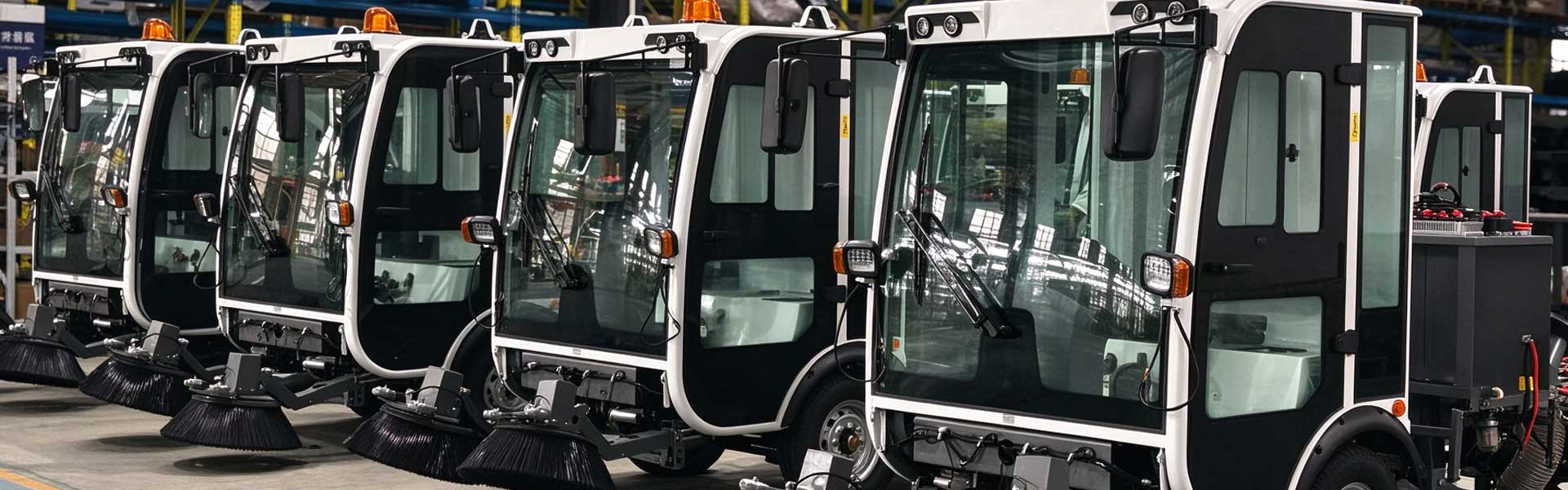
Large warehouses with concrete floors need practical cleaning equipment that can handle extensive working areas, regular dust accumulation and daily maintenance requirements. Floor scrubbers are suitable for logistics centers, distribution warehouses, manufacturing plants, industrial storage facilities and commercial property operators that need to maintain large floor surfaces. For importers, distributors and equipment dealers, warehouse cleaning machines also represent an important product category for customers looking to improve their routine facility cleaning operations.
When purchasing a machine for a large concrete warehouse, the main decision is not simply whether the equipment can clean concrete. Buyers need to determine which model can cover the required area efficiently while matching the warehouse layout, dirt conditions and daily operating schedule.
What Makes Concrete Warehouse Cleaning Different?
Concrete warehouse floors can accumulate dust, packaging debris, tire marks, mud and other residues from daily operations.
Forklifts, pallet trucks and delivery vehicles move through storage aisles and loading areas, bringing dirt into different sections of the building.
A warehouse may also contain production zones, picking areas, loading docks and employee walkways. Each area may have different cleaning requirements.
Manual cleaning methods can become difficult to organize when the total floor area is extensive. A commercial floor scrubber combines water application, mechanical brushing and wastewater recovery to support routine floor cleaning.
For warehouses with suitable floor conditions, this equipment can help cleaning teams manage larger surfaces through a more organized process.
Walk-Behind or Ride-On Floor Scrubber?
The first purchasing decision is choosing between a walk-behind and a ride-on configuration.
Walk-behind floor scrubbers may be suitable for smaller warehouses, workshops and areas with relatively narrow passages. They offer a compact operating arrangement and can be easier to maneuver around obstacles.
Ride-on floor scrubbers are worth considering for larger facilities where operators need to cover extensive concrete floors. The seated operating arrangement can be more convenient for longer cleaning routes, depending on the machine design and working conditions.
For a large distribution warehouse with long aisles and wide open areas, a ride-on machine may be a more practical choice.
However, the actual selection should also consider turning space, aisle width, loading areas and cleaning schedules.
Some facilities may benefit from using a larger ride-on machine for open floor sections and a smaller walk-behind machine for restricted areas.
Compare Cleaning Width and Productivity
Cleaning width is one of the most visible specifications when comparing different models.
A wider cleaning path can cover more floor area per pass, but the actual cleaning productivity depends on operating speed, turning, obstacles, overlapping passes and other site conditions.
For reference, buyers may compare the following types of configurations:
-
500 mm cleaning width for smaller or more restricted cleaning areas.
-
700 mm cleaning width for medium-to-large commercial and industrial floors.
-
860 mm cleaning width for facilities requiring a wider cleaning path.
These are model selection references rather than fixed rules. Actual productivity should be checked against the manufacturer's specifications and the warehouse layout.
Buyers should also distinguish between theoretical cleaning productivity and actual daily cleaning performance. A machine's published square-meter-per-hour figure may not reflect the results achieved in a warehouse with numerous storage racks and narrow turning areas.
Tank Capacity and Battery Operating Time
Large warehouses often have extensive cleaning routes, so water tank capacity and battery arrangements deserve particular attention.
The clean water tank determines how much solution the machine can carry, while the recovery tank collects wastewater during operation.
A larger tank may reduce the frequency of refilling and emptying, but buyers should consider the machine's dimensions and overall weight.
Battery specifications are equally important.
For electric floor scrubbers, buyers should confirm battery voltage, capacity, charging requirements and expected operating time under the manufacturer's stated conditions.
Facilities with long daily cleaning schedules may need to consider battery capacity, charging periods and the possibility of organizing multiple cleaning shifts.
The correct choice depends on the actual operating schedule rather than tank size or battery capacity alone.
Selecting the Right Model for Different Warehouse Areas
A warehouse should ideally be divided into different cleaning zones before equipment is purchased.
Storage aisles: Machine width and turning radius are important because racks and stored goods may restrict movement.
Open storage areas: Wider cleaning paths may help operators cover large floor sections.
Loading and unloading zones: Buyers should consider the type of dirt, vehicle movement and available cleaning time.
Production and packing areas: Equipment dimensions, cleaning requirements and access restrictions should be evaluated.
Employee walkways: A smaller and more maneuverable configuration may be preferable in narrow spaces.
This area-based approach helps buyers avoid purchasing equipment that is too large for certain sections or unnecessarily small for the main warehouse floor.
Commercial Benefits of Using a Suitable Warehouse Floor Scrubber
The right cleaning equipment can help warehouse managers organize routine floor maintenance more efficiently.
A machine with suitable cleaning width and tank capacity may reduce the number of cleaning passes and interruptions required for water management.
Ride-on models can also help operators cover larger areas using a seated operating arrangement.
For logistics businesses, maintaining cleaner floor surfaces can support a more organized working environment around storage racks, picking zones and transportation routes.
For cleaning contractors serving multiple warehouse customers, offering different machine configurations can help match equipment to different facility sizes and operating conditions.
What Buyers Should Prepare Before Requesting a Quotation
To compare quotations accurately, provide the supplier with the following information:
-
Total concrete floor area.
-
Main warehouse aisle width.
-
Type of dirt and cleaning requirements.
-
Daily cleaning duration.
-
Preferred walk-behind or ride-on configuration.
-
Required cleaning width.
-
Water tank capacity expectations.
-
Battery operating requirements.
-
Estimated purchasing quantity.
Photos or a simple warehouse layout can also help explain special access restrictions.
These details allow the supplier to recommend more suitable equipment instead of simply quoting the largest available model.
Warehouse Floor Scrubber Supply for International Buyers
Voril is a trading and export company serving international distributors, dealers, wholesalers, cleaning contractors and industrial equipment buyers.
We can assist customers in comparing available walk-behind and ride-on floor scrubbers according to warehouse area, cleaning requirements, machine dimensions and operating schedules.
Our purchasing support includes product specifications, configuration discussions, quotations, order coordination, export documentation and international shipping arrangements.
For distributors, we can also discuss different cleaning-width categories and model combinations suitable for their target markets.
Get a Quotation for Your Concrete Warehouse
If you need a floor scrubber for a large concrete warehouse, provide the total floor area, aisle width, cleaning conditions, daily working hours and preferred machine type.
Voril can help you compare suitable models and prepare a quotation based on your facility requirements or wholesale purchasing plan.
Contact us with your specifications and estimated quantity to discuss the right warehouse floor cleaning equipment for your business.