
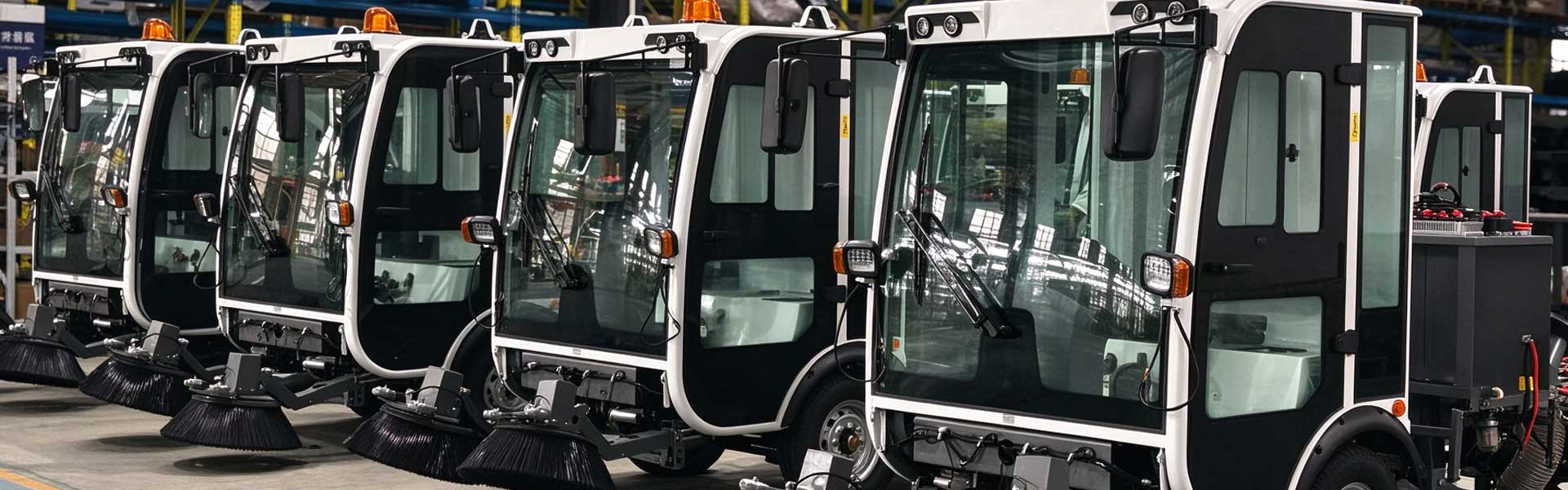
Factory floors can accumulate dust, production residue, tire marks, and stubborn grime throughout the working day. In facilities where lubricants or oils are used, floor contamination may be more difficult to remove than ordinary dirt.
For production managers, maintenance teams, and industrial cleaning contractors, selecting suitable cleaning equipment can help make routine floor maintenance more manageable. However, not every floor scrubber is designed to handle heavy oil contamination.
The right purchasing decision starts with understanding the type of residue, the floor material, and the cleaning performance required.
1. Identify the Type of Factory Floor Contamination
Different industrial environments create different cleaning challenges.
Manufacturing workshops may accumulate dust and general production residue. Assembly areas may experience tire marks and localized grime, while machinery maintenance zones may have oil or grease deposits.
An industrial floor scrubber for factory use can be suitable for routine cleaning on compatible hard floors, but its effectiveness depends on the machine configuration, cleaning solution, brushes, and type of contamination.
Before purchasing, distinguish between ordinary dirt and substantial oil deposits. Heavy oil may require an approved degreasing procedure or preliminary treatment before mechanical scrubbing.
Hazardous chemical spills, flammable liquids, and other dangerous substances require appropriate site-specific procedures rather than ordinary floor cleaning.
2. Choose Equipment for Your Factory Layout
Factory layouts can vary considerably. Some facilities have wide production halls with long, open cleaning routes, while others contain narrow passages, machinery, workstations, and restricted access areas.
Walk-behind scrubbers may be appropriate for smaller production spaces and areas requiring frequent maneuvering. Ride-on models can be more practical for larger factory floors where broad cleaning coverage is a priority.
When evaluating a factory floor cleaning machine for sale, compare cleaning width, tank capacity, maneuverability, battery runtime, brush configuration, and recovery performance.
For floors with persistent contamination, ask whether the proposed machine is suitable for the specified cleaning chemicals and floor conditions. Confirm its limitations before assuming it can remove heavy oil or grease independently.
3. Evaluate Cleaning Performance Beyond Advertised Capacity
Manufacturers may provide theoretical or estimated cleaning productivity, but factory conditions can affect actual results.
Obstacles, machine turns, heavy contamination, operator experience, and the need to refill or empty tanks all influence cleaning time.
Instead of choosing equipment solely by the largest advertised coverage figure, estimate how much floor area must be cleaned during each maintenance period.
If your factory operates several shifts, consider whether the machine can complete the required cleaning within the available downtime. For a large facility, compare multiple models based on both practical access and expected daily workload.
A supplier should be able to provide model specifications and explain the operating conditions behind the published performance figures.
4. Check Brush Options and Cleaning Solution Compatibility
Floor condition and contamination type influence the cleaning configuration you need.
Different brush or pad options may be suitable for different hard-floor surfaces and cleaning tasks. A compatible cleaning solution may also be necessary for particular types of residue.
Before ordering, tell the supplier whether your floors are concrete, coated concrete, tile, or another material. Explain whether the main problem is ordinary dirt, embedded grime, oil residue, or a combination of contaminants.
A heavy duty floor scrubber supplier should help you identify suitable options, but specific oil-removal performance must be confirmed for the proposed machine and cleaning process.
Also check that the selected chemicals are compatible with the machine, floor coating, seals, and other components.
5. Consider Durability, Maintenance, and Parts Supply
Factories often require consistent cleaning schedules, so equipment maintenance is an important purchasing consideration.
Ask about routine servicing, brush and squeegee replacement, battery maintenance, warranty coverage, and the availability of spare parts.
The machine should also be appropriate for the working environment. If the area contains flammable vapors, combustible dust, or other hazardous conditions, verify the equipment's suitability before use. A standard electric scrubber should not be assumed safe for hazardous locations.
For overseas purchasing, confirm the supplier's export packaging, documentation, technical support, and arrangements for obtaining replacement components.
6. Compare Total Purchasing Costs
The cheapest machine may not be the most economical option if it cannot handle the required workload or is unsuitable for your floor conditions.
Compare the initial price, included accessories, expected consumable costs, battery requirements, maintenance needs, and after-sales support.
For larger factories, a ride-on model may justify its higher purchase price if it substantially improves practical cleaning productivity. Smaller production areas may achieve better value with a compact walk-behind machine.
The correct choice depends on your specific facility rather than a single machine specification.
7. Request a Factory Floor Scrubber Quotation
When contacting a supplier, provide the floor area, floor material, type of contamination, cleaning frequency, and preferred machine configuration.
If oil and grease are recurring problems, describe the residue and explain whether it is light surface contamination or heavier buildup. Include photographs or a floor plan in your supplier inquiry if available.
Ask for the recommended model, relevant specifications, compatible cleaning options, warranty details, and delivery terms.
Contact us to discuss your factory floor cleaning requirements and request a quotation for an industrial floor scrubber suited to your working environment.