
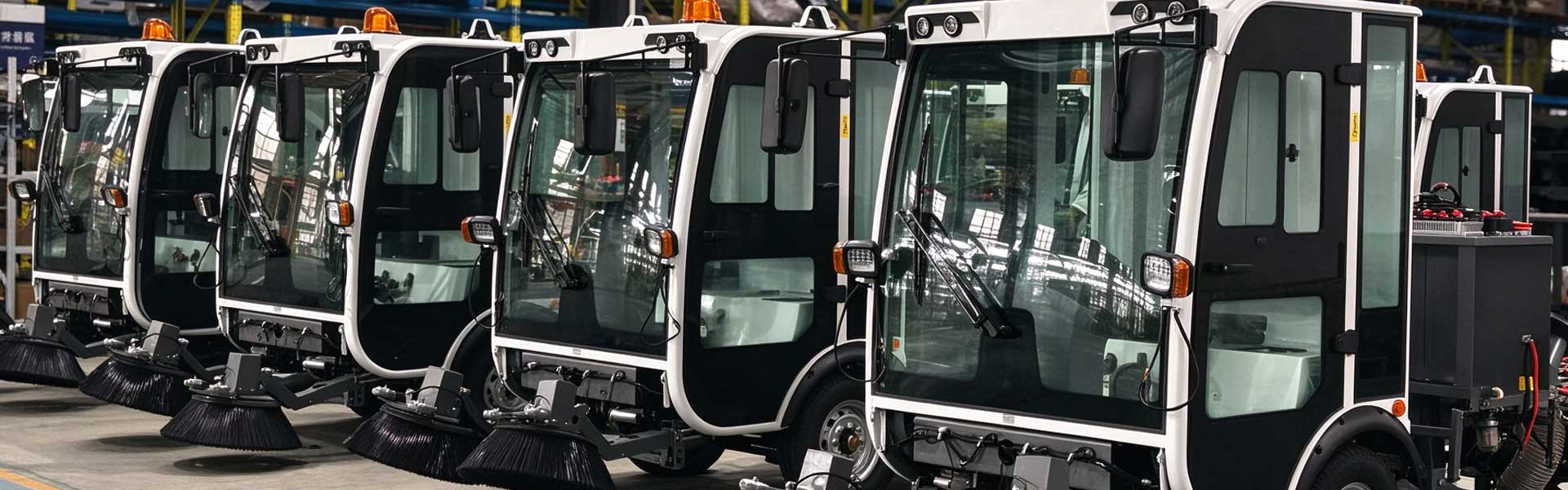
Warehouses and distribution centers need clean floors to support daily operations. Forklift traffic, pallet movement, dust, tire marks, and occasional liquid spills can gradually affect the condition of warehouse aisles and loading zones.
For facility managers and warehouse operators, manual cleaning may become difficult as floor areas and operating hours increase. An appropriate commercial floor scrubber can help improve routine floor maintenance while reducing the labor required for large-area cleaning.
Choosing the right machine depends on the warehouse layout, floor conditions, cleaning frequency, and the amount of space that must be maintained.
1. Keep Warehouse Aisles Ready for Daily Operations
Warehouse aisles often experience continuous movement from forklifts, pallet trucks, picking equipment, and personnel. Dust and loose dirt can accumulate quickly, especially in facilities with frequent loading and unloading activities.
A commercial floor scrubber for warehouse applications combines floor scrubbing with water recovery to help remove routine dirt and leave the cleaned surface with less residual water than conventional wet mopping.
This can make daily cleaning more practical across suitable hard-floor surfaces. However, the floor must be compatible with the selected cleaning method, and the machine should be operated according to its instructions.
For busy facilities, cleaning schedules should also be coordinated with warehouse traffic to avoid interfering with loading, picking, and transportation activities.
2. Choose Between Walk-Behind and Ride-On Models
The warehouse layout is an important factor when selecting a floor cleaning machine.
Walk-behind scrubbers are often suitable for smaller warehouses, narrow aisles, storage rooms, and areas with frequent obstacles. They provide direct operator control and may be easier to maneuver in confined spaces.
Ride-on scrubbers can be worth considering for larger distribution centers and open warehouse floors where extended cleaning routes make operator productivity a priority.
When comparing a warehouse floor cleaning machine for sale, evaluate the cleaning width, recovery tank capacity, maneuverability, battery runtime, and estimated cleaning coverage.
Published productivity figures are usually based on stated operating conditions. Actual results may vary depending on obstacles, turning time, floor condition, and the frequency of refilling or emptying tanks.
3. Improve Cleaning Around Loading Zones
Loading zones often experience heavier dirt accumulation than ordinary storage areas. Dust, tire marks, tracked-in debris, and residue from transported goods can create additional cleaning demands.
A suitable floor scrubber can support routine maintenance on compatible hard floors, particularly when the cleaning schedule is consistent.
Before purchasing, identify the types of contamination present. Ordinary dust and traffic marks may require a different approach from persistent grease, oil, or chemical residues.
Select cleaning chemicals approved for the machine and floor surface, and verify that the chosen equipment is suitable for the actual contamination. Not every standard scrubber is designed for heavy oil contamination or hazardous spills.
4. Match the Machine to Your Warehouse Size
A machine that is too small may require excessive cleaning time, while a machine that is too large may struggle in narrow aisles or congested loading areas.
When evaluating an industrial floor scrubber supplier, provide the approximate floor area, aisle width, floor material, cleaning frequency, and available charging arrangements.
For example, a facility with extensive open concrete floors may benefit from a larger ride-on model. A warehouse with narrow storage aisles and frequent obstacles may be better served by a compact walk-behind unit.
Consider the entire cleaning route rather than just the total square footage. The ability to turn, access corners, and move between operating zones can influence real-world productivity.
5. Consider Operating Costs and After-Sales Support
The initial purchase price is only one part of the investment. Buyers should also evaluate battery replacement, brushes, squeegee blades, cleaning chemicals, routine maintenance, and spare parts availability.
Ask the supplier about warranty coverage, operator manuals, maintenance recommendations, and technical support. For overseas buyers, confirm whether replacement parts can be shipped to the destination market and whether remote troubleshooting is available.
If the warehouse operates multiple shifts, compare the expected runtime and charging arrangements with the cleaning schedule. The machine should be able to complete the required work within the available maintenance window.
6. Request a Warehouse Floor Scrubber Quotation
To obtain a suitable quotation, provide your warehouse area, floor material, aisle dimensions, cleaning frequency, and preferred machine type.
If you are considering several models, ask for a comparison of cleaning width, tank capacity, battery configuration, and estimated productivity. This makes it easier to assess which machine suits your facility.
Contact us to compare commercial floor scrubbers for warehouse aisles, loading zones, and distribution centers. Request a quotation based on your floor area and daily cleaning requirements.