
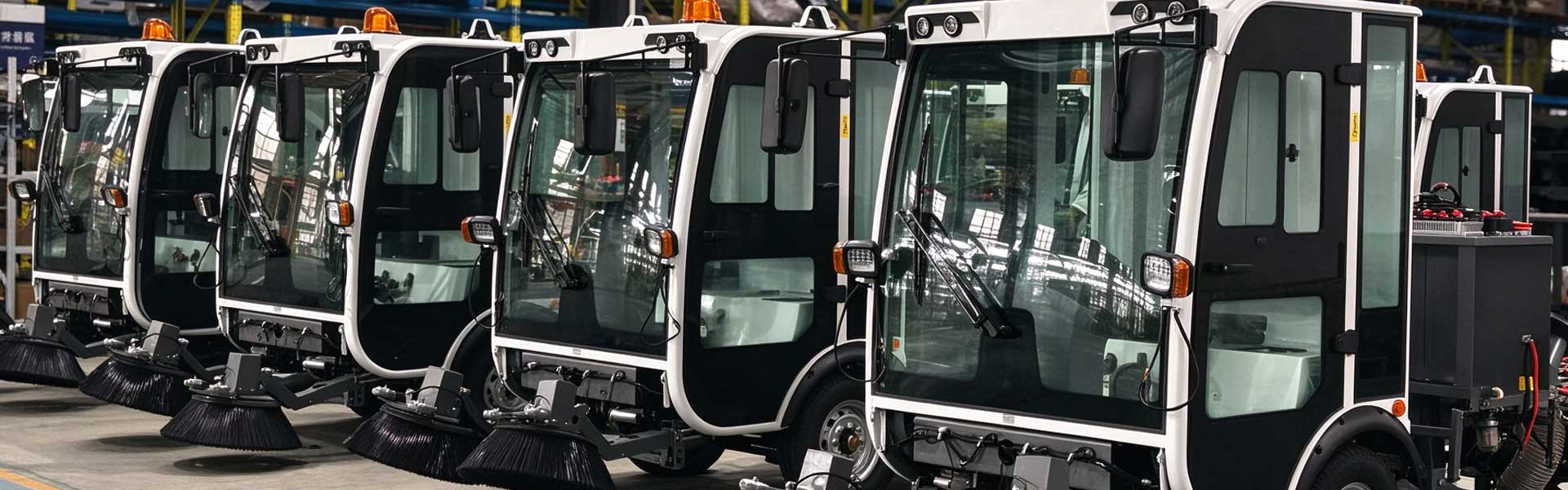
Shopping malls receive a continuous flow of visitors throughout the day. Entrances, shopping corridors, food court walkways, indoor parking areas, and common spaces can quickly accumulate dust, paper scraps, packaging, leaves, and other dry debris.
For shopping mall operators and cleaning contractors, maintaining clean floors is not simply a matter of appearance. It also affects daily maintenance schedules, labor allocation, and the overall shopping environment.
Manual sweeping can be practical for small spills and corners, but cleaning thousands of square meters of public flooring repeatedly can place considerable demands on cleaning teams.
A suitable electric floor sweeper can help commercial facilities collect dry debris more efficiently and maintain cleaner public areas with less repetitive manual work.
For facility managers, retail property operators, and equipment distributors, the key is to select a machine that matches the mall's floor area, visitor traffic, debris levels, and available cleaning time.
1. Identify the Areas That Need Frequent Sweeping
A shopping mall usually contains several cleaning zones with different requirements. Before purchasing a floor sweeper for shopping mall applications, identify where dry debris accumulates most frequently.
Typical areas include:
- Main entrances and exit corridors
- Large shopping walkways
- Food court seating areas and surrounding corridors
- Supermarket entrances
- Indoor parking areas
- Loading and service corridors
- Exhibition and event spaces
For example, a shopping mall may have 18,000 m² of public hard flooring, including 10,000 m² of main walkways and open common areas. The remaining areas may include smaller corridors, service zones, and restricted spaces.
The main walkways may be suitable for a ride-on sweeper, while compact equipment or manual tools may be more practical for narrow corners and congested sections.
This zone-based approach helps avoid purchasing one oversized machine that cannot access all areas efficiently.
2. Calculate the Required Sweeping Productivity
Cleaning time is an important purchasing consideration, particularly for malls that need to maintain their appearance throughout opening hours.
Suppose a shopping center needs to sweep 12,000 m² of public flooring within a two-hour cleaning window before opening.
The required average productivity is:
12,000 m² ÷ 2 hours = 6,000 m²/h.
This is the minimum average productivity needed to complete the planned area within the available time.
However, a machine's theoretical productivity is not the same as actual daily performance. Turning, pedestrian barriers, furniture, cleaning overlaps, debris disposal, and repeated passes can reduce practical output.
When comparing a shopping mall floor sweeper, ask suppliers for the rated sweeping capacity and consider how the machine will perform on your actual cleaning route.
A wider sweeping path and higher rated capacity may be beneficial for large open areas, but maneuverability and operator visibility are equally important in a busy retail environment.
3. Choose Between Walk-Behind and Ride-On Sweepers
The size of the cleaning area and the layout of the shopping mall influence which machine configuration is most suitable.
Walk-behind floor sweepers can be useful for smaller retail spaces, narrow corridors, compact entrances, and areas where operators need to maneuver around displays or furniture.
Ride-on floor sweepers are often worth considering for larger shopping centers, extensive common areas, indoor parking facilities, and long corridors with relatively open routes.
| Purchasing factor | Walk-behind sweeper | Ride-on sweeper |
|---|---|---|
| Typical application | Smaller areas and restricted spaces | Large common areas and long routes |
| Operator operation | Operator walks behind the machine | Operator rides on the machine |
| Main advantage | Maneuverability | Higher potential area coverage |
| Key limitation | More operator walking | Requires sufficient turning and access space |
| Main purchasing priority | Compact dimensions and access | Sweeping capacity and debris collection |
For example, a neighborhood shopping center with 3,000 m² of indoor flooring may find a walk-behind sweeper adequate for its routine needs. A regional mall with 20,000 m² of common hard flooring may benefit from a ride-on model for the main walkways, with smaller equipment used in restricted areas.
The final choice should be based on the actual cleanable area, route design, and available cleaning time.
4. Select a Sweeper That Handles the Mall's Typical Debris
Shopping malls generate different types of dry debris depending on the location and season.
Entrance areas may collect dust, leaves, and small stones tracked in from outside. Food court walkways may accumulate napkins, packaging fragments, and crumbs. Retail corridors may collect paper scraps and dust from high visitor traffic.
Before buying a floor sweeper for shopping mall operations, confirm the types of debris the machine is designed to collect.
Important considerations include:
- Main brush and side brush configuration
- Hopper capacity
- Dust-control features
- Brush adjustment and replacement
- Performance on smooth tile, concrete, or other hard flooring
- Access for emptying and cleaning the debris container
For example, a mall with 2,000 m² of entrance and food court corridors may need frequent debris collection throughout the day. A larger hopper can reduce interruptions if the machine is suitable for the debris volume and route.
However, a sweeper designed for dry debris collection should not be treated as a replacement for a floor scrubber when the problem involves sticky beverage spills, grease, or wet floor residue.
Using the appropriate equipment for each cleaning task helps maintain more consistent results.
5. Consider Dust Control During Business Hours
Some shopping malls need to perform maintenance while stores remain open. In these environments, dust control, noise, visibility, and pedestrian access become important purchasing factors.
A battery-powered sweeper with suitable dust-control features may be useful for routine daytime maintenance, depending on the model and operating conditions.
When comparing machines, ask about:
- Dust filtration or dust-suppression arrangements
- Noise levels under stated operating conditions
- Battery runtime
- Operator visibility
- Turning radius and overall width
- Ease of emptying the debris hopper
- Availability of replacement filters and brushes
For example, a retail facility that performs maintenance between customer rush periods may prefer a compact, easy-to-maneuver machine for quick cleaning runs.
A larger ride-on sweeper may be better suited to early-morning or late-night cleaning when the main corridors are less crowded.
Actual suitability depends on the machine's specifications and the mall's operating rules.
6. Estimate the Potential Labor-Time Savings
Equipment buyers often compare mechanized sweeping with their existing manual cleaning procedures.
Consider a hypothetical mall with 12,000 m² of hard flooring that requires daily sweeping.
Suppose the current manual method achieves an average productivity of 500 m² per labor-hour. The estimated labor requirement would be:
12,000 ÷ 500 = 24 labor-hours.
Now suppose a selected sweeper achieves an actual average productivity of 3,000 m²/h on the same route.
The estimated machine operating time would be:
12,000 ÷ 3,000 = 4 hours.
In this example, the estimated time for the main sweeping task decreases from 24 labor-hours to four machine operating hours.
These figures are illustrative assumptions, not guaranteed performance results. The comparison also excludes the operator's time for machine preparation, debris disposal, edge cleaning, and other manual tasks.
Even so, the calculation provides a useful starting point for estimating how a shopping mall floor sweeper could change staffing requirements and cleaning schedules.
For an accurate purchasing decision, conduct a trial or use realistic productivity estimates based on the proposed cleaning route.
7. Check Battery Runtime, Hopper Capacity, and Maintenance Requirements
A machine that performs well for a short demonstration may not be the most suitable choice for an entire cleaning shift.
Before purchasing, confirm that the machine can handle the intended cleaning schedule and debris volume.
For battery-powered sweepers, ask about:
- Battery type and rated capacity
- Expected operating time under typical conditions
- Charging duration and electrical requirements
- Replacement battery availability
- Main brush and side brush service life
- Filter cleaning and replacement procedures
- Hopper capacity and emptying arrangements
For example, a shopping mall planning two cleaning sessions per day should confirm whether the selected machine can complete each session without excessive charging interruptions.
If the mall covers a large area with significant daily debris, hopper capacity may be just as important as the sweeping path. Frequent disposal stops can reduce the time available for actual cleaning.
The most suitable configuration balances cleaning productivity, runtime, debris collection, and routine maintenance.
8. Select Equipment According to Floor Layout and Access Restrictions
Shopping malls contain more than wide corridors. Cleaning teams may also need to work around shop entrances, decorative installations, columns, seating areas, escalator landings, and temporary promotional displays.
A larger machine may cover open areas efficiently but struggle in congested sections. A compact machine may be easier to maneuver but require more time to cover extensive open floors.
Before purchasing, measure:
- Narrowest corridor and access width
- Doorway and service entrance dimensions
- Available turning space
- Storage area for the machine
- Transport routes between floors, if applicable
- Loading and unloading access
For example, a mall with a large central atrium and several narrow retail corridors may use a ride-on sweeper for the atrium and a compact sweeper for the smaller corridors.
This approach allows cleaning teams to match equipment to the space rather than forcing one machine to handle every task.
9. Example: Choosing a Sweeper for a 25,000 m² Shopping Mall
Consider a shopping mall with 25,000 m² of total public and service floor area. The facility manager estimates that approximately 16,000 m² of hard flooring needs routine mechanical sweeping.
The mall operates seven days a week, and cleaning is scheduled both before opening and during quieter periods.
The purchasing requirements include:
- Main machine-cleanable area: 16,000 m²
- Cleaning window for the primary route: three hours
- Main debris: dust, paper scraps, leaves, and packaging fragments
- Main surfaces: tile and other suitable hard flooring
- Operating environment: mixed pedestrian traffic
- Additional requirement: quick access to narrower corridors
The minimum average productivity for the main route is:
16,000 ÷ 3 = approximately 5,333 m²/h.
The facility manager could compare suitable ride-on sweepers with sufficient rated capacity, hopper size, battery runtime, and maneuverability. A smaller unit may be retained for entrances or restricted areas where the larger machine cannot operate efficiently.
The manager should also evaluate dust control and operator visibility for any daytime cleaning.
This example demonstrates how the required productivity and layout can guide equipment selection before a quotation is requested.
10. Sweeping and Scrubbing: Should Your Mall Purchase Both?
Sweeping and scrubbing solve different floor-cleaning problems.
A floor sweeper is designed primarily to collect dry debris such as dust, paper scraps, leaves, and small particles. A floor scrubber uses brushes or pads and cleaning solution to remove adhered dirt and suitable liquid residues, with a recovery system collecting the dirty water.
For many shopping malls, both types of equipment may be useful.
| Cleaning requirement | Recommended equipment type |
|---|---|
| Dust and dry debris in public corridors | Floor sweeper |
| Leaves and small debris at entrances | Floor sweeper |
| Paper scraps and packaging fragments | Floor sweeper |
| Sticky beverage residue | Floor scrubber |
| Routine washing of suitable hard floors | Floor scrubber |
| Large open areas requiring both tasks | Separate sweeping and scrubbing operations, as appropriate |
For example, the mall may use a sweeper to collect dry debris from its main walkways before using a scrubber during scheduled deep cleaning.
The correct equipment combination depends on the type of flooring, cleaning frequency, and available labor.
11. What Should Buyers Check Before Requesting a Quotation?
Before contacting a supplier, prepare the main requirements for the shopping mall.
| Purchasing item | Information to prepare |
|---|---|
| Cleaning area | Total machine-cleanable area in square meters |
| Floor type | Tile, concrete, or other hard surfaces |
| Debris type | Dust, leaves, paper, packaging, and other dry waste |
| Cleaning schedule | Required hours per shift |
| Machine type | Walk-behind or ride-on |
| Sweeping capacity | Required average productivity |
| Hopper capacity | Expected debris volume |
| Battery runtime | Daily operating requirements |
| Site restrictions | Corridors, doors, storage, and turning space |
| Delivery | Destination country and quantity required |
Providing this information helps suppliers recommend a more appropriate machine and prepare a quotation that reflects your actual application.
12. Request a Shopping Mall Floor Sweeper Quotation from Voril
For shopping mall operators, cleaning contractors, and commercial equipment distributors, the right sweeper can help improve routine debris collection, reduce repetitive manual sweeping, and make cleaning schedules more predictable.
Voril supports international buyers looking for electric floor cleaning equipment for commercial and industrial applications.
Share your mall's cleanable floor area, typical debris, required cleaning time, preferred machine type, and destination country to help narrow down suitable models.
Contact Voril to discuss your shopping mall cleaning requirements, compare floor sweeper configurations, and request an export quotation for your business.