
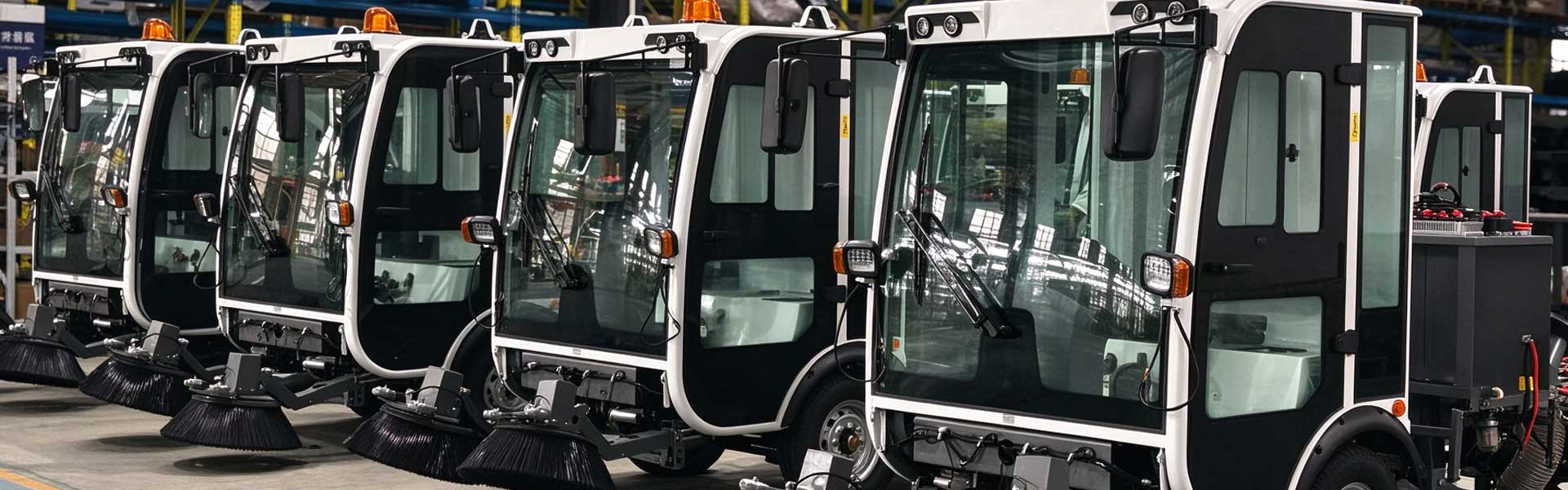
Commercial buildings often require daily floor cleaning to maintain a professional appearance, control dirt buildup, and provide a comfortable environment for employees, visitors, and customers.
Office complexes, hotels, hospitals, shopping centers, and mixed-use commercial facilities may have thousands of square meters of flooring that need regular cleaning. Using manual mops across these areas can increase labor requirements and make cleaning results more difficult to maintain consistently.
A suitable floor scrubber can help facility managers improve cleaning productivity, reduce repeated manual work, and establish a more predictable cleaning schedule.
For property management companies, cleaning contractors, and equipment distributors, choosing the right machine means matching cleaning capacity, tank size, maneuverability, and operating time to the building's actual requirements.
1. Match the Floor Scrubber to the Building's Total Cleaning Area
The first step in selecting a floor scrubber for commercial buildings is to estimate the floor area that needs machine cleaning.
A small office building with 2,000 m² of hard flooring has different requirements from a hotel or commercial complex with 15,000 m² of corridors, lobbies, and common areas.
Consider this illustrative example:
A commercial building has 8,000 m² of machine-cleanable flooring. The facility team plans to complete routine cleaning within a four-hour working window.
The required average cleaning productivity is:
8,000 m² ÷ 4 hours = 2,000 m² per hour.
This figure represents the minimum average productivity needed to meet the schedule. The actual machine selection should allow additional time for turning, refilling, dirty-water disposal, obstacles, and heavily soiled areas.
For example, a walk-behind scrubber with a stated theoretical productivity of 2,500 m²/h may be suitable for certain smaller or more segmented areas. A larger building with longer corridors and extensive open floors may benefit from a ride-on model offering greater theoretical productivity.
Actual results depend on the layout, operator experience, floor condition, cleaning settings, and machine configuration.
Before requesting quotations, calculate the cleanable floor area rather than relying only on the building's total gross floor area.
2. Choose Between Walk-Behind and Ride-On Floor Scrubbers
The correct machine configuration can influence cleaning time, operator workload, and daily productivity.
Walk-behind floor scrubbers are often suitable for smaller commercial areas, corridors, compact rooms, and locations with frequent obstacles. Their relatively compact dimensions can make it easier to maneuver around furniture, doorways, and narrow spaces.
Ride-on floor scrubbers may be more suitable for larger open areas, including hotel ballrooms, commercial lobbies, large retail floors, and extensive building corridors.
For example, a cleaning contractor managing three office buildings of approximately 3,000 m² each may prefer a compact walk-behind machine for individual sections with narrow access. A large convention facility with 12,000 m² of open hard flooring may benefit from a ride-on scrubber for its main floor areas.
| Purchasing factor | Walk-behind scrubber | Ride-on scrubber |
|---|---|---|
| Typical application | Smaller rooms and segmented areas | Larger open commercial floors |
| Maneuverability | Useful around obstacles | Useful across broad floor areas |
| Operator workload | Operator walks behind the machine | Operator rides on the machine |
| Main purchasing priority | Compact dimensions and access | Productivity and operating time |
| Best selection approach | Match to smaller cleaning zones | Match to large, repetitive cleaning routes |
Many commercial buildings benefit from using different cleaning methods in different areas. A large ride-on machine may handle the main lobby, while smaller equipment or manual tools manage narrow corners and congested areas.
3. Compare Cleaning Width and Practical Productivity
Cleaning width influences how much floor can be covered during each pass. However, a wider brush or cleaning path does not automatically guarantee higher daily productivity.
The building layout, turning space, furniture, elevators, and cleaning schedule also matter.
For example, a 500 mm cleaning path may be suitable for corridors and moderately sized rooms. A 700 mm or wider configuration may be worth considering for broad open floors where operators can work in longer, uninterrupted passes.
Suppose two machines have theoretical productivity ratings of 2,500 m²/h and 4,500 m²/h.
For a 6,000 m² cleaning area, the theoretical time calculations are:
- Machine A: 6,000 ÷ 2,500 = 2.4 hours
- Machine B: 6,000 ÷ 4,500 = approximately 1.33 hours
These are theoretical estimates, not guaranteed cleaning times. Real-world performance will be affected by turning, refilling, obstacles, cleaning passes, and soil levels.
When comparing a commercial floor scrubber, ask the supplier to distinguish between theoretical cleaning capacity and expected performance under your operating conditions.
4. Select the Right Tank Capacity for Daily Cleaning
Clean-water and recovery-tank capacity affect how frequently operators need to stop for refilling and wastewater disposal.
A machine with larger tanks can be advantageous when cleaning extensive floors, but it may also have greater overall dimensions and operating weight. A smaller machine may be easier to maneuver in a building with limited access.
For example, a facility that cleans 6,000 m² of flooring each morning may prefer a scrubber with enough tank capacity to complete long cleaning sections without repeated interruptions.
Before purchasing, consider:
- Total area cleaned per shift
- Expected water consumption
- Frequency of heavy-soil cleaning
- Availability of refill and wastewater disposal points
- Elevator and doorway dimensions
- Machine weight when tanks are full
The correct tank capacity depends on the machine's actual water consumption, brush pressure settings, floor conditions, and cleaning procedure.
For facilities with long corridors or large open spaces, reducing unnecessary refill stops can help operators follow a more consistent cleaning schedule.
5. Consider Battery Runtime and Cleaning Schedules
Battery-powered floor scrubbers can be practical for commercial buildings where equipment needs to operate during scheduled cleaning windows.
However, buyers should evaluate operating time against their actual workload rather than relying only on the advertised battery duration.
Suppose a hotel schedules cleaning between 10 p.m. and 2 a.m., giving the cleaning team four hours to complete designated common areas.
A scrubber advertised with three to four hours of operating time may be worth considering, but the buyer should confirm how that rating was measured and whether it includes the expected driving, scrubbing, and stopping time.
Ask suppliers about:
- Battery type and capacity
- Expected operating time under typical loads
- Charging duration
- Charging requirements
- Battery replacement costs
- Availability of replacement batteries and chargers
A suitable battery configuration should accommodate the cleaning schedule while allowing time for refilling, wastewater disposal, and routine checks.
6. Choose a Machine for Different Commercial Floor Types
Commercial buildings may contain several types of hard flooring, including polished concrete, ceramic tile, vinyl, and other sealed surfaces.
The machine's brush or pad selection, cleaning pressure, and detergent compatibility should match the floor manufacturer's recommendations and the building's maintenance requirements.
For example:
- Office corridors may need routine removal of dust, tracked-in dirt, and shoe marks.
- Hotel lobbies may require more frequent cleaning because of heavy visitor traffic.
- Retail areas may accumulate dust, beverage spills, and marks from shopping carts.
- Healthcare facilities may have specific cleaning procedures and chemical requirements.
A floor scrubber can help standardize routine cleaning, but it should not be assumed suitable for every surface or every contamination type without checking the manufacturer's recommendations.
When evaluating a commercial floor cleaning machine, describe your floor material and typical soil conditions to the supplier. This helps determine the appropriate brush, pad, squeegee, and cleaning configuration.
7. Calculate the Potential Labor Savings
Commercial facility managers often evaluate equipment purchases by comparing cleaning productivity and labor requirements.
Consider an illustrative example in which a facility needs to clean 6,000 m² of hard flooring daily.
If a manual cleaning team averages 400 m² per labor-hour under its existing procedure, the estimated labor requirement is:
6,000 ÷ 400 = 15 labor-hours.
If a floor scrubber achieves an actual average productivity of 1,800 m² per hour in the same facility, the estimated machine operating time is:
6,000 ÷ 1,800 = approximately 3.33 hours.
This comparison does not mean that the machine eliminates all manual work. Edges, corners, obstacles, restrooms, and specialized areas may still require separate cleaning methods.
It illustrates how a machine may reduce the time required for suitable open-floor areas. Actual productivity should be measured during a trial or estimated using realistic operating conditions.
For cleaning contractors, these calculations can help evaluate staffing plans, service schedules, and equipment investment.
8. Example: Choosing a Scrubber for a Commercial Office Complex
Consider a property management company responsible for a 10,000 m² office complex.
The building has a large entrance lobby, several long corridors, common areas, and smaller rooms. The cleaning team must complete most floor cleaning before employees arrive in the morning.
The purchasing team identifies the following requirements:
- Total machine-cleanable area: approximately 7,000 m²
- Cleaning window: four hours
- Flooring: primarily hard, sealed surfaces
- Main challenges: visitor traffic, tracked-in dirt, and limited cleaning time
- Access requirements: elevators, corridors, and restricted storage space
The required average productivity is 7,000 ÷ 4 = 1,750 m²/h.
The company could compare a suitable walk-behind model with a ride-on configuration, checking practical productivity, tank capacity, battery runtime, and overall dimensions.
A ride-on machine may be advantageous for the lobby and longer corridors, while a smaller machine may be easier to use in compact sections.
The final choice should be based on the layout and cleaning trial results, not theoretical productivity alone.
9. What Should Buyers Check Before Ordering?
Before requesting a quotation, prepare the main purchasing requirements.
| Item | Information to Provide |
|---|---|
| Cleaning area | Total machine-cleanable square meters |
| Floor type | Concrete, tile, vinyl, or other surface |
| Cleaning schedule | Hours available per shift |
| Machine preference | Walk-behind or ride-on |
| Productivity | Required area per hour |
| Tank capacity | Expected uninterrupted cleaning time |
| Battery requirements | Daily operating hours and charging access |
| Site restrictions | Doorways, elevators, corridors, and storage space |
| Delivery | Destination country and quantity required |
Providing these details makes it easier to compare suitable machines and avoid purchasing equipment that is too small, too large, or poorly matched to the building.
10. Request a Commercial Floor Scrubber Quotation from Voril
The right floor scrubber should help your team meet cleaning schedules, reduce repetitive manual work, and maintain consistent results across high-use commercial areas.
Voril supports international buyers looking for practical electric floor cleaning equipment for commercial and industrial applications.
Share your cleaning area, floor type, required productivity, preferred machine configuration, and destination country to help narrow down the available options.
Contact Voril to discuss your commercial building cleaning requirements, compare floor scrubber models, and request an export quotation.