
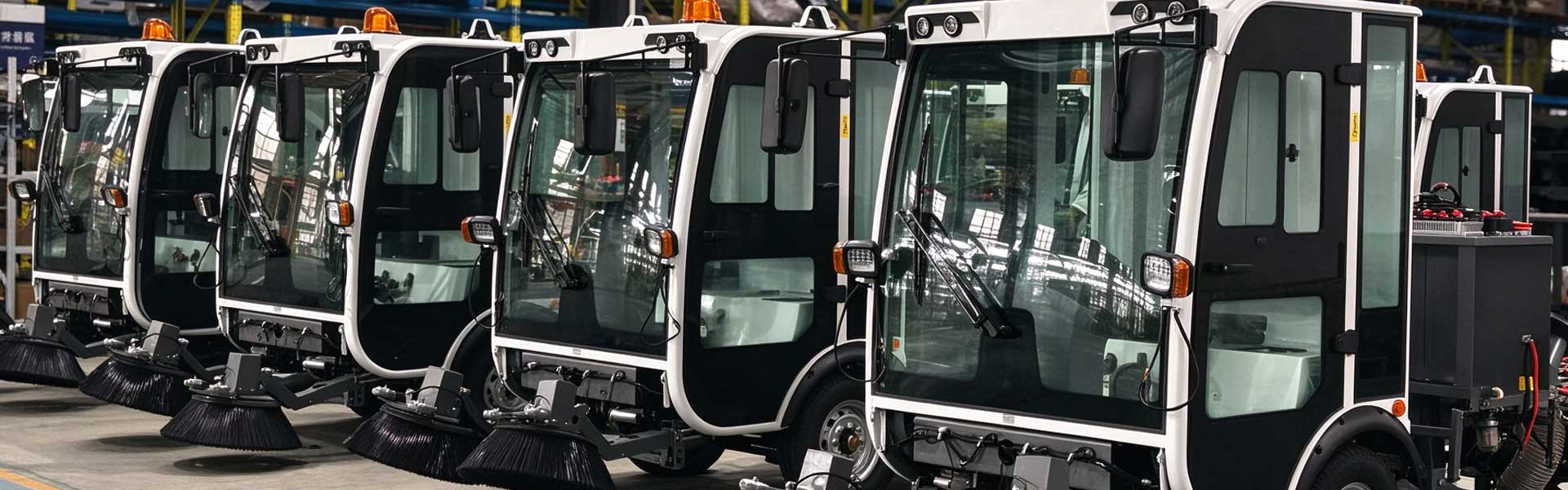
Parking garages are not easy areas to keep clean. Concrete floors collect tire dust, sand, mud, oil residue, water marks and other dirt every day. Sweeping can remove loose debris, but it does not provide the deep cleaning needed to keep concrete parking floors looking maintained.
This is where a floor scrubber for parking garage applications can make a practical difference.
For parking operators, property managers and commercial cleaning contractors, the goal is not simply to own a cleaning machine. The goal is to clean a large concrete area within a limited maintenance window while reducing manual labor and keeping the floor ready for daily vehicle traffic.
Why Concrete Parking Floors Need More Than Sweeping
A parking garage may look relatively clean from a distance, but concrete surfaces can hold layers of fine dust, tire marks, road salt, mud and oily residue.
A broom or dry sweeper is useful for removing loose debris. However, once dirt becomes attached to the concrete surface, water, detergent and mechanical brush action can provide a more complete cleaning process.
For this reason, many commercial cleaning operations use sweeping and scrubbing as separate steps.
Nilfisk recommends using a sweeper first to remove loose debris and then a floor scrubber for deeper cleaning.
Typical parking garage dirt includes:
- Tire dust
- Sand and gravel
- Mud
- Oil and grease residue
- Road salt
- Beverage and food spills
- Water stains
- Fine construction dust
For a garage serving hundreds of vehicles per day, these contaminants can accumulate quickly.
Where a Floor Scrubber Makes the Biggest Difference
A parking garage floor scrubber becomes particularly valuable when the cleaning requirement is more than simple dust removal.
1. Concrete Driving Lanes
Driving lanes receive continuous tire traffic. Over time, tire marks and accumulated dirt can make the concrete appear dark and worn.
A powered scrub brush applies mechanical agitation while the machine distributes cleaning solution and recovers dirty water.
This creates a much more controlled cleaning process than manually scrubbing sections of concrete.
2. Parking Spaces
Parking spaces can collect dirt that is difficult to remove with a conventional mop.
A ride-on or walk-behind scrubber can move systematically from one parking row to another, allowing the operator to cover large numbers of spaces without carrying buckets and manually pushing a mop.
3. Parking Garage Ramps
Ramps are particularly important because vehicles repeatedly accelerate and brake on the same concrete surfaces.
A machine selected for garage applications should have suitable traction and maneuverability.
The exact machine should be selected according to the ramp gradient, surface condition and available cleaning space rather than simply choosing the largest model.
One 2026 parking-garage case study, for example, compares a compact ride-on scrubber with a walk-behind machine and reports coverage of up to approximately 55,000 sq. ft./hour for the ride-on configuration.
How Much Cleaning Area Can a Commercial Scrubber Handle?
The answer depends heavily on the machine configuration.
Commercial floor scrubbers range from compact walk-behind machines to large ride-on models.
For example, Kärcher lists compact walk-behind scrubbers with cleaning performance up to approximately 15,000 sq. ft./hour, larger walk-behind machines up to approximately 28,000 sq. ft./hour, and ride-on models up to approximately 64,500 sq. ft./hour in its commercial range.
These figures are useful for understanding machine categories, but buyers should not assume that the published maximum area rate equals actual job productivity.
Parking garages contain:
- Columns
- Parked vehicles
- Curved ramps
- Corners
- Pedestrian areas
- Narrow parking lanes
- Drainage areas
Therefore, the machine's maneuverability can be just as important as its theoretical cleaning capacity.
Example: Cleaning a 30,000 sq. ft. Parking Area
Consider a commercial parking garage with approximately:
30,000 sq. ft. of concrete floor
The facility manager wants the garage cleaned during a limited overnight maintenance window.
A small walk-behind scrubber rated around 15,000 sq. ft./hour may theoretically cover the area in about two hours under ideal conditions.
However, actual cleaning takes longer because the operator must turn around columns, navigate parking spaces, refill tanks and reposition the machine.
A larger ride-on machine with a rated productivity of 40,000–60,000 sq. ft./hour can provide significantly more coverage capacity.
The practical advantage is not simply speed.
It is the ability to finish the same cleaning task with one operator and fewer interruptions.
Choosing the Right Machine for a Concrete Garage
When buying a concrete floor cleaning machine, look at the complete operating requirement rather than focusing on one specification.
Cleaning Width
A wider cleaning path can reduce the number of passes required.
For large open garage areas, a wider scrub deck can improve productivity.
For garages with narrow aisles and many columns, however, an oversized machine may become difficult to maneuver.
Recovery and Solution Tank Capacity
Tank capacity affects how long the machine can operate before stopping for refilling or wastewater disposal.
For a large parking garage, larger tanks can reduce interruptions.
This becomes especially important when the cleaning team has only two or three hours available overnight.
Battery Runtime
Battery-powered scrubbers are particularly useful for indoor parking structures because they avoid exhaust emissions.
Before purchasing, compare:
- Battery capacity
- Charging time
- Expected runtime
- Cleaning speed
- Shift requirements
The machine should be able to complete the planned cleaning area without creating unnecessary charging downtime.
Brush Pressure
Concrete floors can require stronger mechanical cleaning than lightly soiled indoor floors.
If the garage has tire marks, embedded dirt or oily residue, ask the supplier about available brush pressure and suitable brush or pad configurations.
The correct setup depends on the concrete surface and the type of contamination.
Walk-Behind or Ride-On Floor Scrubber?
The answer depends on the parking garage.
Walk-Behind Scrubber
A walk-behind machine can be suitable for:
- Smaller garages
- Narrow parking areas
- Ramps with limited space
- Areas with many obstacles
- Cleaning contractors handling multiple smaller sites
It provides good maneuverability while keeping the initial equipment investment relatively controlled.
Ride-On Scrubber
A ride-on machine becomes more attractive when the facility has:
- Large floor areas
- Long driving lanes
- Large parking sections
- Regular cleaning schedules
- Limited overnight cleaning time
For example, Kärcher's commercial ride-on scrubbers include models designed for large-area cleaning, with listed productivity reaching tens of thousands of square feet per hour.
The operator can remain seated while covering the garage, which can also make long cleaning shifts more practical.
Don't Choose a Machine Based Only on Square Feet per Hour
This is one of the most important points for buyers.
A machine advertised at 50,000 sq. ft./hour will not necessarily clean a 50,000 sq. ft. parking garage in one hour.
Actual productivity is affected by:
Cleaning width + travel speed + turns + obstacles + water capacity + battery runtime + operator experience
A machine with slightly lower theoretical productivity may actually be more efficient if it can easily move between columns, parking spaces and ramps.
For parking garages, maneuverability should therefore be considered together with cleaning width.
A Practical Buying Example
Imagine a property management company operates three parking garages:
| Garage | Floor Area | Main Cleaning Requirement |
|---|---|---|
| Garage A | 15,000 sq. ft. | Weekly concrete cleaning |
| Garage B | 35,000 sq. ft. | Weekly deep cleaning |
| Garage C | 70,000 sq. ft. | Large-area overnight cleaning |
Garage A may be efficiently handled by a compact walk-behind scrubber.
Garage B may benefit from a larger traction-drive or compact ride-on machine.
Garage C is more likely to justify a larger ride-on scrubber designed for high-area productivity.
This is why machine selection should begin with the actual cleaning area and available cleaning time.
Use a Sweeper Before Scrubbing When Necessary
A parking garage often contains loose debris before wet cleaning begins.
Sand, gravel, leaves and accumulated dust can reduce the efficiency of a scrubber if they are not removed first.
A practical maintenance process can therefore be:
Step 1: Sweep loose debris
Step 2: Apply cleaning solution
Step 3: Scrub the concrete
Step 4: Recover dirty water
Step 5: Allow the surface to dry
This two-machine approach is particularly useful for large commercial parking facilities.
Why Invest in a Commercial Floor Scrubber?
For property managers, the value of a floor scrubber is not simply a cleaner-looking floor.
It can help reduce:
- Manual scrubbing labor
- Cleaning time
- Repetitive mopping
- Water handling
- Operator fatigue
- Cleaning interruptions
A commercial machine also gives the cleaning team a repeatable process.
Instead of different workers cleaning different sections with different levels of effort, the machine provides controlled brush action, solution distribution and water recovery.
What Should Buyers Ask a Supplier?
Before purchasing a floor scrubber for parking garage, ask the supplier:
- What is the recommended cleaning area per shift?
- What is the actual cleaning width?
- What is the rated productivity?
- What is the solution tank capacity?
- What is the recovery tank capacity?
- How long can the machine operate on one battery charge?
- What brush or pad is recommended for concrete?
- Can the machine handle parking garage ramps?
- What is the minimum turning radius?
- Is a walk-behind or ride-on configuration more suitable?
- What spare parts are normally required?
- Can the supplier provide machine testing before purchase?
These questions help buyers compare machines based on the complete cleaning job rather than a single catalogue number.
Final Thoughts
Concrete parking garages are a strong application for commercial floor scrubbing because the cleaning requirement goes beyond removing loose dust.
A suitable parking garage floor scrubber can combine mechanical brushing, cleaning solution and water recovery to handle tire marks, embedded dirt and other contamination on concrete surfaces.
For smaller garages, a compact walk-behind machine may provide the maneuverability needed for columns, ramps and narrow spaces. For larger facilities, a ride-on concrete floor cleaning machine can provide substantially higher area coverage and reduce operator fatigue.
The best machine configuration ultimately depends on floor area, concrete condition, garage layout, cleaning frequency and available cleaning time.
For buyers comparing commercial floor scrubbers, providing these details to the supplier will make it much easier to receive a machine recommendation and quotation that actually fits the parking garage.