
Parking areas collect dust, leaves, paper, packaging materials, gravel and other loose debris every day. For shopping centers, hotels, factories, warehouses, office buildings and commercial properties, keeping these areas clean is not only about appearance. It is also about maintaining a professional facility and reducing the amount of dirt carried into indoor areas.
For a small parking area, manual sweeping may be sufficient. But when the cleaning area reaches several thousand square meters, using a broom and manual labor can quickly become inefficient.
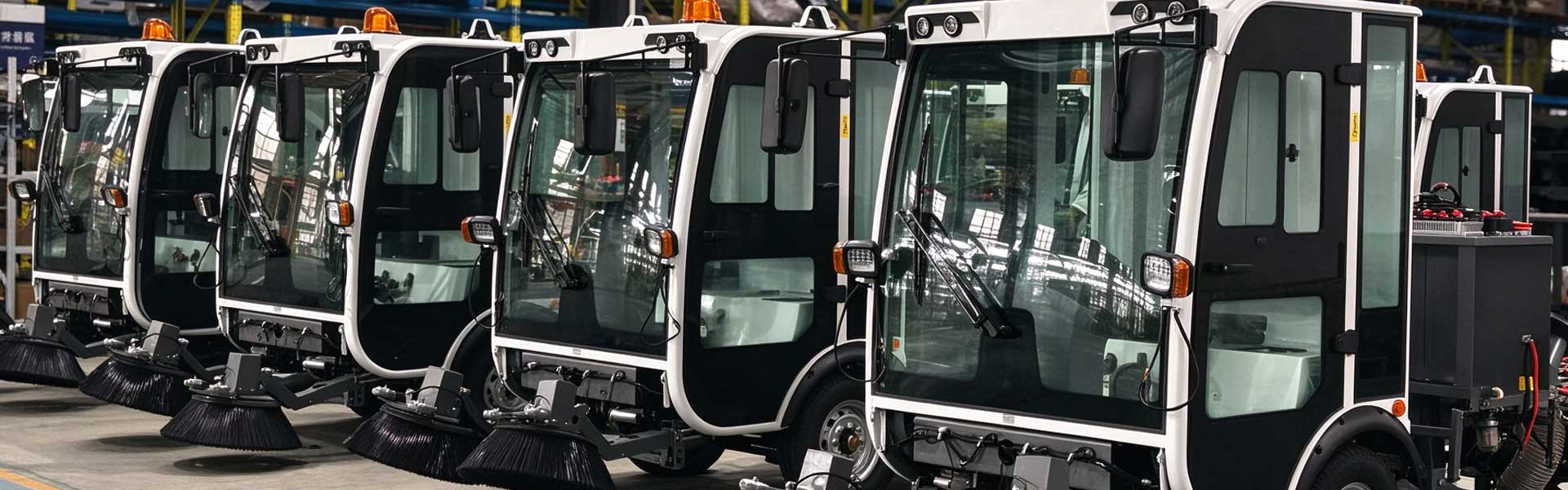
An electric floor sweeper provides a practical way to mechanize this daily cleaning work.
Why Parking Areas Need More Than Manual Sweeping
Parking areas are different from small indoor floors.
A typical parking area may contain:
- Dust and sand
- Dry leaves
- Small stones
- Paper and packaging waste
- Plastic debris
- Dirt brought in by vehicle tires
- Fine particles around parking spaces
- Debris near curbs and corners
A cleaning team may need to cover hundreds or thousands of square meters every day.
For example, consider a commercial parking area of 5,000 m².
If one operator manually sweeps an average effective area of approximately 800–1,000 m² per hour, the basic sweeping work could require roughly 5–6 hours.
A suitable machine can significantly increase the area cleaned per hour.
This is why commercial property managers often consider mechanized sweeping when the same large area needs to be cleaned repeatedly.
Choose an Electric Floor Sweeper Based on Parking Area Size
The first purchasing question should be:
How many square meters need to be cleaned every day?
A practical starting point is:
| Parking Area | Suggested Equipment Direction |
|---|---|
| Below 1,000 m² | Compact walk-behind sweeper |
| 1,000–5,000 m² | Larger walk-behind or compact ride-on |
| 5,000–10,000 m² | Ride-on electric sweeper |
| Above 10,000 m² | High-productivity ride-on sweeper |
These are purchasing guidelines rather than fixed rules. Actual selection depends on parking layout, debris level, cleaning frequency and required cleaning time. Commercial sweeper manufacturers similarly offer different machine sizes for small, medium and large areas.
For example, a 2,000 m² hotel parking area may benefit from a compact machine that can maneuver around parked vehicles, while a 15,000 m² logistics facility may prioritize cleaning width, hopper capacity and operator productivity.
Cleaning Width Directly Affects Productivity
Cleaning width is one of the easiest specifications for a buyer to understand.
Suppose two machines operate at an effective average speed of 4 km/h.
A simplified theoretical calculation for a machine with a 700 mm cleaning path is:
4,000 m × 0.7 m = 2,800 m²/hour
A machine with a 1,300 mm cleaning path under the same theoretical conditions would provide:
4,000 m × 1.3 m = 5,200 m²/hour
Actual productivity will be lower because the operator must turn, avoid vehicles, follow parking lanes and empty the hopper.
The example nevertheless shows why cleaning width matters when buying a parking lot sweeper.
A wider machine can reduce the number of passes required across an open parking area.
Parking Layout Matters as Much as Area
Two parking lots can have exactly the same area but require completely different machines.
Example A: Open parking lot
- Area: 8,000 m²
- Wide driving lanes
- Few obstacles
- Large open spaces
A larger ride-on floor sweeper for parking lot cleaning can take advantage of its wider cleaning path.
Example B: Shopping center parking area
- Area: 8,000 m²
- Many parked cars
- Narrow lanes
- Columns
- Shopping-cart areas
- Curbs and corners
A more compact machine may be easier to operate.
Therefore, buyers should provide suppliers with both:
Cleaning area + parking layout
rather than only saying "8,000 m² parking lot."
Electric Power Makes Sense for Many Commercial Properties
Battery-powered sweepers are particularly useful when cleaning needs to be carried out without combustion-engine exhaust.
This can be valuable for:
- Covered parking areas
- Parking garages
- Shopping centers
- Hotels
- Warehouses
- Industrial facilities
- Mixed indoor/outdoor cleaning
Battery-powered commercial sweepers are available in compact and ride-on configurations, with manufacturers offering machines specifically for areas such as parking and loading docks.
For a facility manager, the important purchasing questions are:
- How many hours can the machine work?
- How long does charging take?
- What battery type is available?
- Is a replacement battery available?
- Can the machine operate during the required cleaning window?
Hopper Capacity Can Reduce Cleaning Interruptions
A parking area may contain much more debris than a clean indoor warehouse.
Leaves, paper, small stones and other material can quickly fill the collection hopper.
For example, suppose a sweeper has an effective hopper capacity of 100 L.
If the parking area generates approximately 300 L of loose debris during a cleaning cycle, the operator may need to empty the hopper several times.
A larger hopper can therefore reduce interruptions.
Commercial ride-on sweepers are commonly offered with larger debris hoppers specifically for higher-volume sweeping work. For example, current commercial models on the market can have hopper capacities ranging from around 80 L to 150 L or more, depending on machine size.
Dust Control Is Important in Parking Areas
Parking areas generate fine dust as vehicles move across concrete or asphalt surfaces.
A good electric floor sweeper should therefore not only collect larger debris but also manage dust generated during sweeping.
For buyers, useful specifications to ask about include:
- Dust filtration
- Filter cleaning system
- Dust containment
- Suction system
- Side-brush configuration
Dust control becomes especially important in enclosed parking garages.
The goal is not simply to move dust from the floor into the air. The machine should collect loose material while limiting airborne dust.
Example: Cleaning a 10,000 m² Parking Area
Consider a hypothetical shopping center:
Parking area: 10,000 m²
Cleaning frequency: Daily
Available cleaning window: 2 hours
Operator: 1 person
The required average productivity is:
10,000 ÷ 2 = 5,000 m²/hour
A machine selected for this application therefore needs enough practical cleaning productivity to cover approximately 5,000 m² per hour under the actual site conditions.
The buyer should then compare:
- Cleaning width
- Travel speed
- Hopper capacity
- Battery runtime
- Machine width
- Turning radius
- Dust control
- Operator visibility
This is much more useful than simply asking for the "largest parking lot sweeper."
Don't Ignore Curbs and Parking Edges
Most parking areas are not completely open.
Debris tends to accumulate around:
- Curbs
- Walls
- Parking blocks
- Columns
- Drainage areas
- Corners
- Building entrances
A machine with a side brush can help move debris from edges toward the main sweeping path.
When purchasing, ask whether the machine is equipped with:
Main brush + side brush
and whether the side brush configuration is suitable for the parking layout.
When Should You Buy a Ride-On Electric Sweeper?
A ride-on machine becomes more attractive as the cleaning area and frequency increase.
For example:
2,000 m² parking area
Daily cleaning may be manageable with a walk-behind machine.
8,000 m² parking area
A compact ride-on machine can reduce operator fatigue and increase coverage.
15,000+ m² parking area
A higher-capacity ride-on sweeper can make more sense because cleaning speed, hopper capacity and battery runtime become increasingly important.
The decision should be based on the daily workload, not simply the total property size.
Electric Floor Sweeper for Parking Lot: What Should You Ask the Supplier?
Before requesting a quotation, provide:
- Parking area in m²
- Cleaning frequency
- Required cleaning time
- Indoor or outdoor application
- Surface type
- Typical debris
- Narrowest access width
- Number of operators
- Desired cleaning width
- Battery/runtime requirement
For example:
Parking area: 12,000 m²
Surface: Concrete
Cleaning frequency: Daily
Cleaning time: Maximum 3 hours
Debris: Dust, leaves and small stones
Narrowest access: 2.0 m
Operators: 1
Application: Commercial parking area
This information allows the supplier to recommend a more suitable machine.
Reduce Parking Area Cleaning From a Labor Task to a Machine Task
For property managers, the value of an electric sweeper is not simply that it replaces a broom.
The bigger benefit is the ability to create a more predictable cleaning process.
Instead of:
Several workers + manual brooms + several hours
the operation can become:
One trained operator + commercial electric sweeper + scheduled cleaning route
For a 10,000 m² parking facility cleaned every day, even reducing the average cleaning time from 4 hours to 2 hours could save approximately:
2 hours × 30 days = 60 labor-hours/month
The actual savings depend on local labor costs and machine productivity, but the calculation shows why productivity should be part of the purchasing decision.
Choose the Floor Sweeper Around Your Parking Area
The right floor sweeper for parking lot cleaning depends on more than machine size.
A buyer should match:
Parking area → cleaning time → cleaning width → hopper capacity → maneuverability → battery runtime
For small and congested parking areas, a compact electric sweeper can provide better maneuverability.
For larger open parking areas, a ride-on electric sweeper with a wider cleaning path and larger debris hopper can provide higher productivity.
If your facility needs regular cleaning of parking areas, loading zones or large hard-surface spaces, provide the supplier with your area size, cleaning schedule and site layout. This allows the machine to be selected around your actual workload rather than simply choosing a machine from a catalogue.