
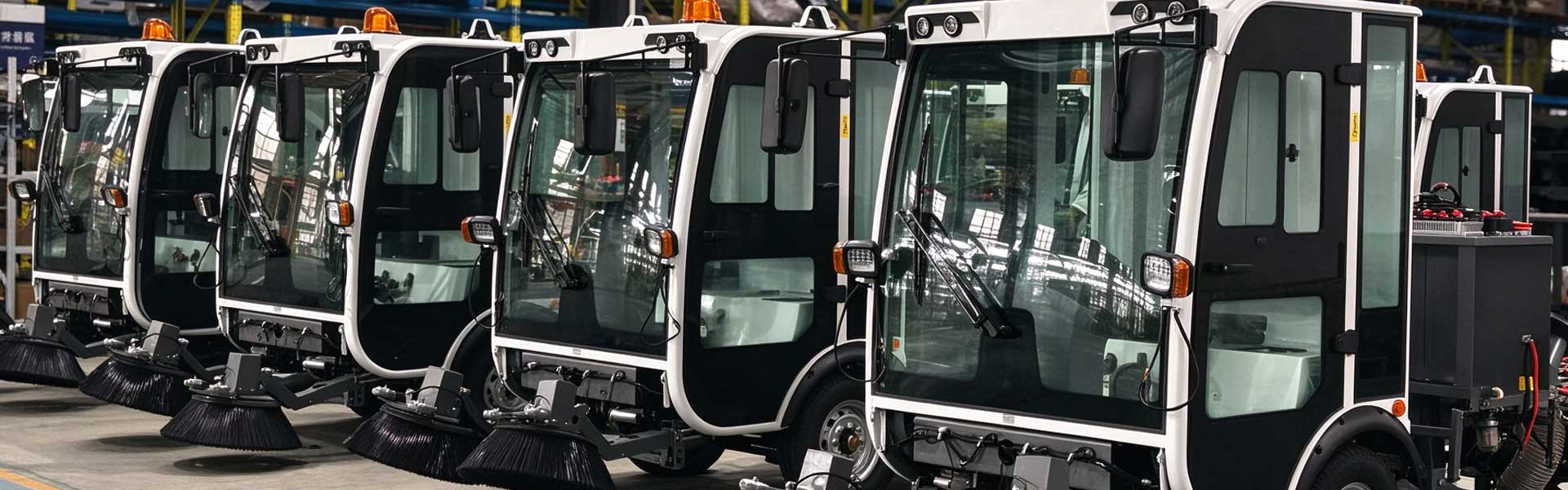
Industrial Floor Sweepers for Metalworking Factories
Metalworking plants, machining workshops, metal fabrication facilities and industrial component manufacturers often deal with demanding floor cleaning requirements. Their production areas may accumulate metal chips, dust, packaging waste and other dry debris during daily operations.
Manual sweeping becomes increasingly difficult as factory floor areas grow and production activities become more intensive. An industrial floor sweeper provides a practical solution for collecting loose debris from compatible floor surfaces and maintaining more organized working areas.
Factory owners, facility managers, industrial equipment importers and cleaning equipment distributors looking for an industrial floor sweeper supplier should compare machine capacity, cleaning width, dust collection arrangements and suitability for the actual type of industrial waste.
The right equipment depends on the factory's floor conditions and cleaning schedule rather than simply choosing the largest machine available.
Why Metalworking Plants Need Heavy-Duty Cleaning Equipment
Metalworking facilities are different from ordinary commercial buildings.
Machining and fabrication processes can generate various types of dry debris, including small metal fragments, dust, packaging waste and general workshop dirt.
These materials may accumulate around production lines, storage areas, internal roads and equipment access zones.
A suitable floor sweeper can help collect compatible loose debris and improve routine floor maintenance.
However, not all metalworking waste should be handled by a standard sweeper. Large sharp metal pieces, hot debris, oily sludge and hazardous dust may require specialized collection methods.
Before purchasing, factories should identify the actual waste types and confirm that the selected equipment is appropriate for the application.
Compare Heavy-Duty Floor Sweeper Configurations
When evaluating metalworking factory cleaning equipment, buyers should compare several machine specifications.
1. Cleaning width
Cleaning width determines the area covered during each pass.
Smaller walk-behind machines may suit workshops with narrow production aisles or restricted spaces. Larger ride-on sweepers are generally more appropriate for extensive factory floors, warehouses and internal industrial roads.
Typical industrial machine categories may include cleaning widths around 800mm, 1,300mm, 1,400mm, 1,800mm and above, depending on the model.
The actual effective cleaning width should be confirmed from the equipment specifications.
2. Waste collection capacity
Dustbins and waste containers determine how much collected material the machine can hold before unloading.
Metalworking plants with frequent debris accumulation may benefit from larger collection capacities.
However, buyers should also consider the type and density of waste. Heavy metal fragments can increase the load quickly and may not be suitable for every sweeper.
3. Cleaning productivity
Manufacturers may provide theoretical cleaning productivity in square meters per hour.
For example, different industrial sweepers may offer rated productivity ranging from several thousand square meters per hour to higher capacities.
Actual performance depends on floor conditions, obstacles, turning requirements, operator speed and the type of debris.
Buyers should evaluate the rated productivity together with the layout of their factory.
4. Dust control
Fine dust is an important consideration in metalworking environments.
A sweeper's filtration and dust-control arrangement should be reviewed according to the materials being collected.
Where combustible, toxic or otherwise hazardous dust is present, a standard industrial sweeper should not be assumed suitable. The factory should identify the required industrial safety and dust collection standards before purchasing.
5. Battery and operating time
Electric sweepers are useful for facilities that prefer battery-powered cleaning equipment.
Buyers should compare battery capacity, charging time, operating duration and maintenance requirements.
For large factories operating several shifts, the charging arrangement should match the cleaning schedule.
Walk-Behind or Ride-On Sweeper: Which Is More Suitable?
The correct machine type depends on the size and layout of the facility.
Walk-behind sweepers are often considered for smaller workshops, production rooms and areas with relatively narrow passages.
They can be easier to position around equipment and restricted workspaces.
Ride-on sweepers are generally more appropriate for larger production floors, warehouses and extensive internal roads. Operators can cover greater distances while seated, making them worth considering for facilities with substantial cleaning areas.
For factories with both narrow and open spaces, using different machine types may provide a more practical solution than expecting one machine to perform every task.
Commercial Value of Mechanized Factory Cleaning
A heavy-duty floor sweeper can help metalworking businesses organize regular cleaning activities.
Mechanized sweeping reduces dependence on manual sweeping across large floor areas and provides a more structured method of collecting loose debris.
Cleaner working areas can also make it easier to organize material movement, inspect production zones and maintain access routes.
For factories expanding their production capacity, additional cleaning equipment can support larger floor areas and more intensive daily operations.
However, sweeping equipment is only one part of an industrial housekeeping program. Oily surfaces, liquid spills, fine hazardous dust and large metal waste may require separate cleaning procedures.
How to Compare Suppliers and Models
Before purchasing a heavy duty floor sweeper for sale, factory managers should prepare a clear description of their facility.
Important details include total floor area, floor material, typical debris, narrowest aisle width, cleaning frequency and operating hours.
Also confirm whether the machine is expected to work indoors, outdoors or in both environments.
When comparing suppliers, request technical specifications covering cleaning width, waste container capacity, rated productivity, machine dimensions, battery configuration and filtration arrangements.
Buyers should also discuss spare parts, maintenance instructions and the availability of technical support.
Voril Industrial Cleaning Equipment Supply
Voril is a trading and export company supplying industrial cleaning equipment to international business customers.
Our product range includes electric floor sweepers and floor scrubbers in different configurations for commercial and industrial applications.
We can help factory owners, importers, distributors and cleaning equipment dealers compare available models according to floor area, cleaning width, debris collection requirements and operating conditions.
Our services include product selection, technical specification coordination, quotations, order communication, export documentation and international shipping support.
For metalworking facilities, we recommend providing information about the actual waste materials before selecting a machine. This helps determine whether a standard sweeper is suitable for the application.
Request a Heavy-Duty Floor Sweeper Quotation
If you are purchasing a floor sweeper for a metalworking factory, machining workshop or industrial production facility, contact Voril.
Please provide the factory floor area, floor type, debris characteristics, required cleaning width, operating hours, estimated quantity and destination port.
Our team can help compare available models and prepare a quotation for your industrial cleaning requirements.