
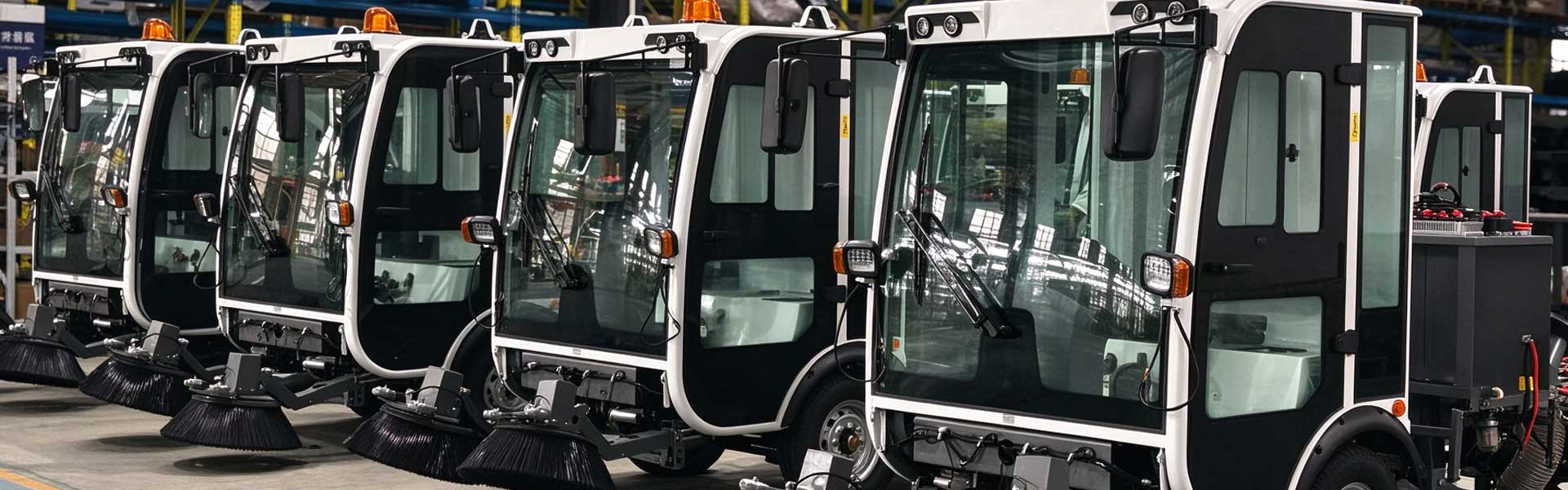
For warehouses, manufacturing plants, logistics centers, and large commercial buildings, choosing the right floor scrubber can make a significant difference to daily cleaning efficiency. A machine that is too small may take too long to finish the job, while an oversized model can increase the initial investment and operating costs unnecessarily.
Before purchasing an industrial floor scrubber, facility managers and equipment distributors should consider floor area, cleaning frequency, floor conditions, and available working time. These factors help identify a machine that can meet practical cleaning targets rather than relying on advertised capacity alone.
Voril supplies electric floor cleaning equipment for commercial and industrial applications, helping overseas buyers compare suitable models for different facility requirements.
1. Start with Your Total Cleanable Floor Area
The first step is to calculate the area that actually needs cleaning.
For example, a distribution center may occupy 12,000 m², but storage racks, equipment, offices, and restricted areas may reduce the accessible cleaning area to 8,000 m².
If the facility must be cleaned within two hours, the required average cleaning productivity is:
8,000 m² ÷ 2 hours = 4,000 m²/h.
This figure provides an initial reference for equipment selection. However, it should not be treated as the machine's required advertised maximum capacity because actual cleaning includes turning, maneuvering around obstacles, refilling, emptying tanks, and overlapping cleaning paths.
A practical purchasing decision should allow enough time for these activities.
2. Compare Walk-Behind and Ride-On Floor Scrubbers
The equipment configuration should match the size and layout of your facility.
Walk-behind floor scrubbers can be suitable for medium-sized production areas, workshops, retail spaces, and locations with narrow aisles. They provide operator control and can be easier to maneuver in confined areas.
For example, a 500 mm walk-behind scrubber with a theoretical productivity rating of approximately 2,500 m²/h may be suitable for smaller cleaning zones. Actual output depends on floor conditions and operating efficiency.
Ride-on floor scrubbers are worth considering for large warehouses, factories, shopping centers, and logistics facilities where operators need to cover extensive floor areas.
A 700 mm ride-on model with a rated productivity of approximately 4,500 m²/h may be a candidate for a facility requiring regular cleaning of several thousand square meters. The buyer should verify the model's actual working performance and whether its tank capacity supports the required cleaning schedule.
For very large areas, higher-capacity models may be more appropriate.
3. Check Tank Capacity and Battery Runtime
Cleaning width is only one part of the purchasing decision. Recovery tank capacity, solution tank capacity, and battery runtime also affect how much floor can be cleaned before work is interrupted.
For example, a ride-on scrubber equipped with an 80 L solution tank and a 100 L recovery tank may reduce refill frequency compared with a smaller-tank machine, depending on water usage and floor conditions.
Battery runtime matters when a facility requires several hours of cleaning each day. Buyers should confirm the expected working duration under realistic operating conditions, charging time, battery type, and whether an additional charging arrangement is needed.
When comparing an industrial floor scrubber for sale, request both the rated productivity and the operating information needed to estimate daily output.
4. Match the Machine to Your Floor Conditions
Different facilities create different cleaning demands.
-
Warehouses: Long aisles, forklift traffic, dust, and tire marks may require a machine suitable for extensive hard-floor cleaning.
-
Manufacturing plants: Oil residues and production debris may require a suitable cleaning method, brush selection, and cleaning solution.
-
Shopping centers: Large open areas and public access schedules may favor quiet operation and efficient cleaning routes.
-
Parking facilities: Floor unevenness, drainage, and debris levels should be considered when selecting equipment.
For heavily soiled industrial floors, cleaning results may depend more on brush pressure, cleaning chemistry, and repeat passes than on machine speed alone.
5. Estimate Your Budget Before Requesting a Quotation
The ride on floor scrubber price depends on cleaning width, tank capacity, battery configuration, control system, and equipment features.
A smaller walk-behind model may offer a lower initial purchase cost, while a ride-on machine may provide better productivity for large open areas. The best investment is the one that meets the facility's cleaning target at an acceptable total operating cost.
Before requesting a quotation, prepare the following information:
-
Total cleanable floor area.
-
Required cleaning time and frequency.
-
Floor type and typical dirt conditions.
-
Preferred walk-behind or ride-on configuration.
-
Required battery runtime and tank capacity.
-
Destination country and estimated order quantity.
This information helps a commercial floor scrubber supplier recommend suitable equipment instead of offering a model based only on its headline specifications.
Find the Right Floor Scrubber with Voril
Voril helps international distributors, dealers, and commercial buyers source electric floor scrubbers for different facility sizes and cleaning requirements.
Share your floor area, cleaning schedule, floor conditions, and budget expectations with our team. We can help compare available equipment configurations and coordinate a quotation based on your application.
Contact Voril to request a commercial floor scrubber quotation and find a suitable solution for your large facility.