
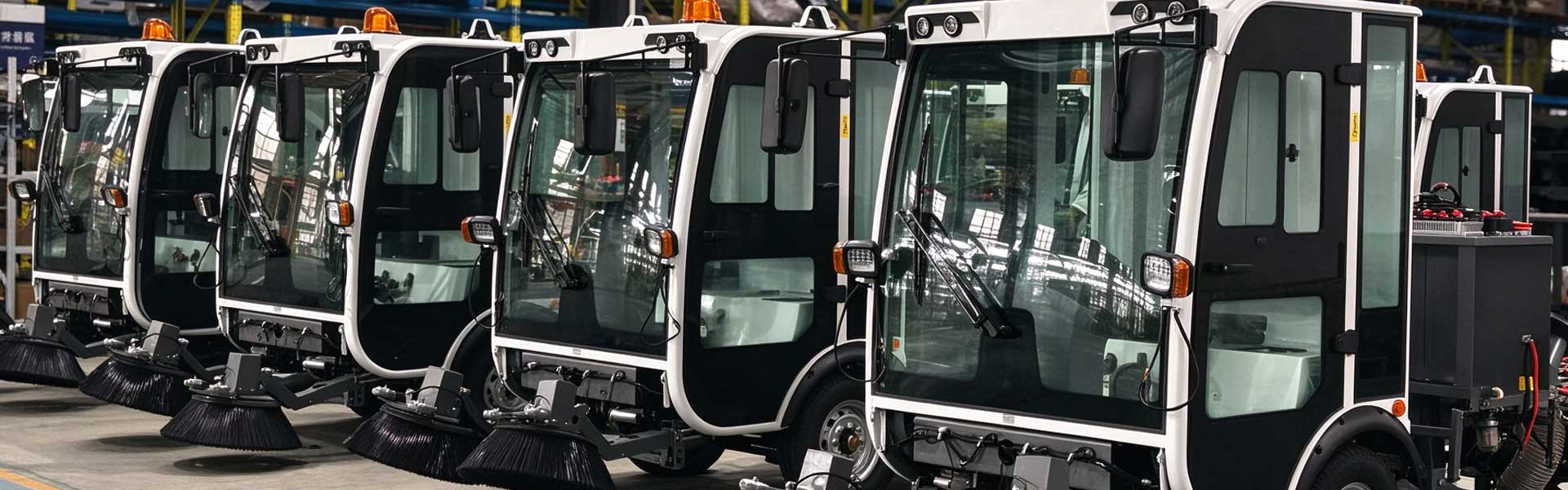
Cleaning a large warehouse, factory, logistics center, or parking facility can require considerable time and labor when unsuitable equipment is used. For businesses responsible for maintaining extensive floor areas, selecting the right industrial floor sweeper can help improve cleaning productivity and reduce dependence on manual sweeping.
However, choosing a machine based only on its advertised cleaning rate may lead to the wrong purchase. Buyers should consider the total floor area, the amount and type of debris, the available cleaning time, and the layout of the facility.
Estimating these requirements before purchasing helps businesses select equipment that fits their actual workload.
1. Calculate the Area That Needs to Be Cleaned
Start by estimating the total cleanable floor area rather than relying only on the size of the building.
A warehouse measuring 10,000 square meters may contain storage racks, machinery, loading zones, and restricted-access areas. These obstacles reduce the floor space that can be swept continuously.
Next, determine how often the area must be cleaned. A factory producing dust and small debris throughout the day may require more frequent cleaning than a storage building with limited traffic.
For example, a distribution center may need daily cleaning of its main aisles and loading areas, while less-used storage zones may follow a different schedule.
This information helps determine whether one compact sweeper is sufficient or whether a larger ride-on model would be more suitable.
2. Understand the Difference Between Rated and Practical Productivity
When comparing an industrial floor sweeper for sale, buyers often see cleaning productivity expressed in square meters per hour.
A machine's rated productivity is useful for initial comparison, but practical output depends on the actual working environment. Turning, obstacles, overlapping passes, debris collection, emptying the hopper, and operator experience can all reduce the area cleaned during an hour.
A useful preliminary calculation is:
Required practical cleaning rate = Area to be cleaned ÷ Available cleaning time
For example, if a facility needs to sweep 12,000 m² within two hours, the required practical rate is 6,000 m²/h.
This is the output that the cleaning operation needs to achieve, not necessarily the machine's advertised maximum rate. The selected machine should have enough rated capacity to meet the target under the site's actual conditions.
If a substantial part of the area is occupied by racks or machinery, assess the accessible cleaning area and the time required to maneuver around obstacles.
3. Choose Between Walk-Behind and Ride-On Sweepers
The right machine depends on both floor area and operating conditions.
Walk-behind floor sweepers may be suitable for smaller warehouses, workshops, retail backrooms, and areas with narrow passages. They offer a practical option when maneuverability is more important than covering a very large area quickly.
Ride-on floor sweepers are generally better suited to extensive warehouses, factories, logistics centers, and large parking areas where operators need to cover substantial distances.
For example, a facility with 15,000 m² of accessible floor space and a short daily cleaning window may benefit from a ride-on model with suitable cleaning width and debris capacity. A smaller workshop with narrow aisles may be better served by a compact walk-behind machine.
When evaluating a ride on floor sweeper supplier, compare the full machine dimensions, turning space, hopper capacity, cleaning width, battery configuration, and maintenance requirements.
4. Consider the Type of Debris
Not all large floor areas present the same cleaning challenge.
Warehouses may accumulate packaging scraps, dust, and loose debris. Manufacturing workshops may produce metal chips, wood particles, or heavier industrial dust, depending on the process. Parking facilities may contain leaves, sand, and outdoor debris.
Before selecting a large area floor cleaning machine, explain the debris type and operating environment to the supplier.
Check whether the sweeper is designed for the expected material and whether the filtration system, brushes, hopper, and optional equipment are suitable.
For example, a machine selected for ordinary warehouse dust may not be the best choice for heavy debris or demanding outdoor conditions. Confirm the model's intended applications rather than assuming that a larger machine can handle every type of waste.
5. Compare Cleaning Width, Hopper Capacity, and Operating Time
Cleaning width influences how much ground a sweeper can cover in each pass, while hopper capacity affects how often collected debris must be emptied.
Battery capacity and operating duration are also important for facilities with fixed cleaning schedules.
A large warehouse may benefit from a wider machine and a larger hopper, but buyers should confirm that the equipment can pass through doorways and operate safely in aisles.
Request information about rated cleaning productivity, hopper capacity, battery runtime, charging time, machine dimensions, and the conditions under which the specifications were measured.
These details help establish whether the machine can complete the required work within the available time.
6. Estimate the Total Cost of Cleaning
The purchase price is only one part of the operating cost.
Compare labor requirements, battery charging, brush replacement, filters, routine maintenance, and expected downtime. For businesses cleaning large areas every day, selecting equipment that matches the workload can be more important than choosing the lowest initial price.
For instance, a logistics center that cleans several thousand square meters each shift should assess whether a ride-on sweeper can meet its cleaning schedule with an appropriate operating margin. A smaller machine may cost less initially but could require more time to complete the same job.
Find the Right Floor Sweeper for Your Facility
Voril offers floor cleaning equipment options for commercial and industrial applications, including warehouses, manufacturing facilities, logistics centers, and other large-area environments.
To receive a suitable recommendation, share your estimated floor area, required cleaning time, debris type, indoor or outdoor conditions, and preferred walk-behind or ride-on configuration.
Contact Voril to compare specifications and request an export quotation. Selecting a sweeper based on practical productivity and site conditions helps you invest in equipment that fits your daily cleaning requirements.