
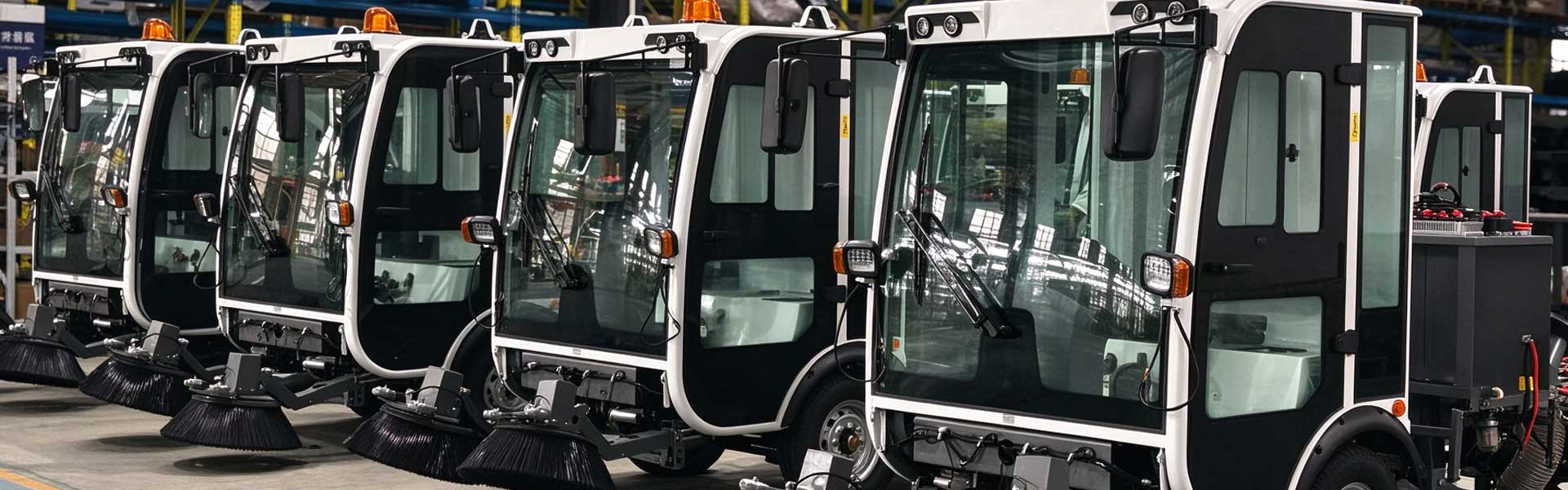
Dust, packaging scraps, small particles, and loose debris can accumulate quickly in industrial facilities. Manufacturing workshops, warehouses, logistics centers, and assembly plants often need repeated sweeping throughout the working day.
When employees spend too much time sweeping large floor areas manually, less time is available for other operational tasks. An industrial floor sweeper can help businesses manage routine floor maintenance with less repetitive manual work.
For factory managers, warehouse operators, cleaning contractors, and equipment distributors, investing in suitable sweeping equipment can improve cleaning productivity and support a more organized workplace.
Why Replace Manual Sweeping in Large Industrial Areas?
Manual sweeping can be effective for corners, small workstations, and localized spills. However, it becomes labor-intensive when employees must clean thousands of square meters every day.
Industrial sweepers use rotating brushes to collect loose debris into a hopper. Depending on the design, dust-control systems may help limit airborne particles during operation.
Common applications include:
-
Manufacturing plants and production workshops
-
Warehouses and distribution centers
-
Packaging and printing facilities
-
Automotive parts factories
-
Industrial storage yards with suitable surfaces
-
Commercial facilities with large hard-floor areas
For example, a factory with 6,000 m² of floor space may need daily removal of cardboard fragments, dust, and small packaging debris. A suitable ride-on sweeper can cover open areas more consistently than repeated manual sweeping, allowing employees to focus on detailed cleaning around equipment and inaccessible corners.
Actual performance depends on debris type, floor conditions, machine specifications, and operating practices.
Walk-Behind or Ride-On Floor Sweeper?
Choosing between a walk-behind and a ride-on model is one of the first decisions buyers should make.
Walk-Behind Industrial Sweepers
Walk-behind machines are useful for smaller production areas, narrower passages, and facilities with frequent obstacles.
They can provide a practical alternative to manual sweeping while allowing operators to maneuver around equipment, storage racks, and workstations.
Ride-On Industrial Sweepers
Ride-on machines are generally more suitable for large warehouses, factories, and facilities with extensive open floor areas.
Depending on the model, features may include a wider sweeping path, larger debris hopper, powered travel, and a dust-control system.
For example, a logistics facility with 15,000 m² of open warehouse flooring may prefer a ride-on sweeper to cover routine cleaning routes more efficiently. Smaller machines may still be needed for narrow aisles and restricted sections.
Buyers should compare sweeping width, theoretical cleaning capacity, hopper volume, operating time, turning radius, and filtration arrangements before making a decision.
Select a Sweeper Based on the Type of Debris
Not all industrial dirt requires the same equipment.
Cardboard pieces, packaging scraps, dry dust, and small loose particles are common sweeping applications. Larger debris or heavier materials may require a machine specifically designed to handle them.
If the facility generates fine dust, buyers should ask about the filtration and dust-control system. The correct configuration depends on particle size, the quantity of dust, and the operating environment.
A standard industrial sweeper should not automatically be assumed suitable for combustible dust, hazardous substances, or environments requiring specialized explosion protection.
Before requesting an industrial floor sweeper for sale, describe the debris, floor surface, and daily cleaning area so the supplier can recommend an appropriate configuration.
How an Industrial Sweeper Can Reduce Cleaning Workload
A sweeper helps mechanize repeated cleaning routes across open areas. This can reduce the amount of time employees spend pushing brooms and collecting loose debris manually.
For example, a warehouse team that previously assigned several workers to routine sweeping may be able to reorganize its cleaning schedule around a powered machine, while retaining manual tools for corners and detailed cleaning.
The actual labor savings depend on the facility layout, cleaning frequency, machine capacity, and staffing arrangements. Buyers should evaluate performance under their own operating conditions rather than relying only on advertised maximum cleaning figures.
Find a Reliable Ride-On Floor Sweeper Supplier
When evaluating a ride-on floor sweeper supplier, check whether the proposed machine matches the size of the facility and the type of debris generated.
Request specifications covering sweeping width, hopper capacity, machine dimensions, battery or fuel configuration, filtration, maintenance requirements, and available replacement parts.
For international procurement, also confirm warranty coverage, operating manuals, export packaging, and shipping arrangements.
A supplier that clearly explains equipment limitations can help buyers avoid selecting an oversized machine for a small facility or an undersized machine for a large industrial site.
What Affects the Industrial Sweeper Machine Price?
The industrial sweeper machine price varies according to machine size, sweeping width, hopper capacity, drive system, filtration configuration, battery capacity, and optional equipment.
Walk-behind models may suit businesses with limited budgets and smaller cleaning areas, while ride-on machines require a different investment but can be more appropriate for large facilities.
When comparing quotations, include maintenance costs, replacement parts, shipping expenses, and warranty arrangements. The lowest initial price may not provide the best overall value if the equipment cannot handle the actual cleaning workload.
Request an Industrial Floor Sweeper Quotation
Voril supports international business buyers looking for electric sweepers and floor cleaning equipment for commercial and industrial applications.
Whether you operate a factory, warehouse, logistics facility, or cleaning equipment distribution business, share your floor area, debris type, operating environment, and destination country to discuss suitable models.
Replacing repetitive manual sweeping with a properly selected industrial floor sweeper can help streamline routine cleaning and allow your team to focus on higher-value operational tasks.