
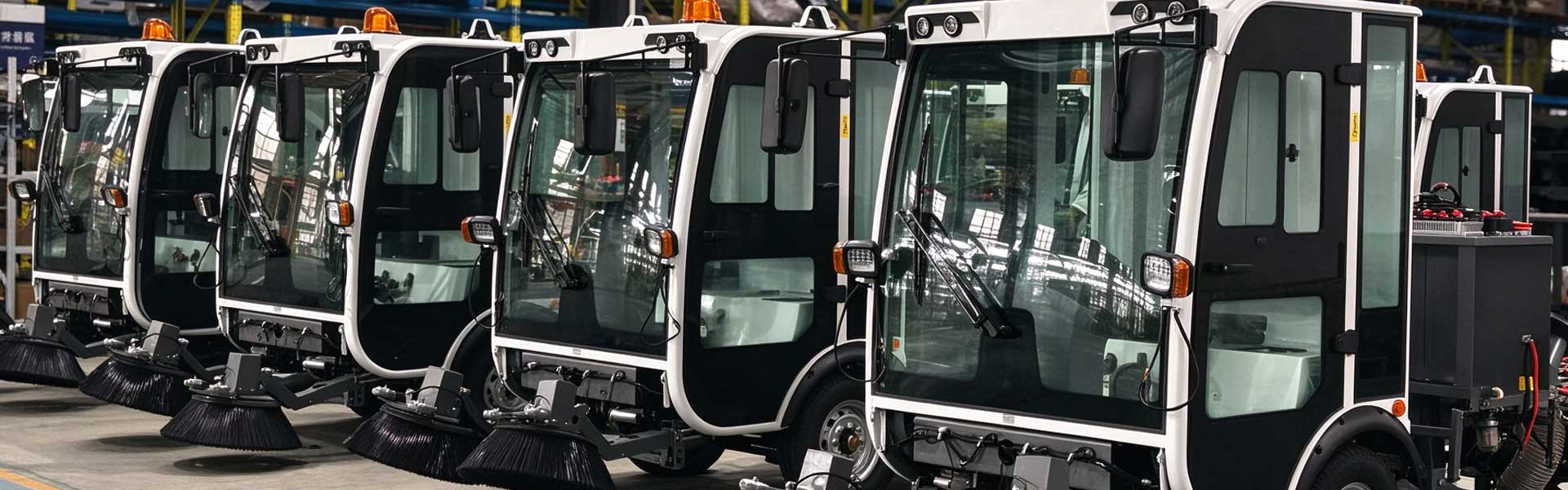
For a professional cleaning company, buying a floor sweeper is not simply about finding a machine with the biggest brush or the highest cleaning speed. The right machine needs to match the jobs you actually take on.
A small retail store, a 30,000-square-foot warehouse, and a large logistics center have very different cleaning requirements. Choosing a machine that is too small can increase labor time, while buying a machine that is too large can increase your investment without improving your business.
If you are looking for a floor sweeper for business, start with your cleaning jobs, then choose the machine.
1. Start With the Cleaning Areas You Usually Serve
The first question is simple:
How much floor do you normally clean in one job?
For example, a cleaning company may handle:
- Supermarkets and retail stores
- Warehouses and distribution centers
- Workshops and factories
- Parking areas
- Schools and commercial buildings
- Shopping centers and public facilities
A compact or walk-behind commercial floor sweeper can be practical for smaller and more congested areas because the operator can easily move around shelves, racks, doors and corners.
For larger open floors, a wider self-propelled or ride-on floor sweeper can reduce the number of passes required.
As a reference, commercial walk-behind sweepers on the market can offer published productivity figures around 30,000–36,000 ft²/h, while larger ride-on and industrial machines can provide substantially higher coverage. Actual productivity depends on turning, obstacles, floor conditions and operator movement.
That difference becomes important when you are charging customers by the job.
2. Match the Sweeper to Your Daily Workload
Suppose your cleaning company receives a contract for a 50,000-square-foot warehouse.
If your machine can realistically clean around 25,000 ft² per hour under working conditions, the basic sweeping time could be approximately:
50,000 ÷ 25,000 = 2 hours
A larger machine with higher practical productivity may reduce that time considerably.
This does not mean that the biggest floor sweeper is automatically the right choice. Your calculation should also include:
- Aisle width
- Turning areas
- Obstacles
- Debris volume
- Battery runtime
- Hopper capacity
- Operator working time
A machine specification should therefore be evaluated according to the complete cleaning route rather than only the maximum advertised speed.
3. Choose Walk-Behind or Ride-On Based on Your Customers
For many cleaning businesses, walk-behind machines are a practical starting point.
They are suitable for:
- Retail stores
- Workshops
- Medium-size warehouses
- Schools
- Commercial buildings
- Narrow aisles
A ride-on commercial floor sweeper becomes more attractive when your customers have large open areas and long cleaning routes.
For example, if a contractor regularly cleans 100,000–200,000 ft² warehouses, reducing operator walking time can become an important part of the equipment investment.
The machine is not only cleaning the floor. It is helping your company complete more square footage with the same workforce.
4. Pay Attention to Cleaning Width
Cleaning width directly affects how many passes the operator needs to make.
Consider two machines:
Machine A: 600 mm cleaning width
Machine B: 800 mm cleaning width
If both machines operate at similar practical speeds, the wider machine can cover more floor in each pass.
But wider is not always better.
If your customer has narrow warehouse aisles, a machine that is too wide may become difficult to maneuver. In that situation, a slightly narrower machine can actually deliver better productivity because the operator spends less time turning and repositioning.
Before ordering, measure:
- Narrowest doorway
- Narrowest aisle
- Elevator entrance
- Storage area
- Turning radius
This simple check can prevent an expensive purchasing mistake.
5. Battery Runtime Matters for Cleaning Contractors
If you operate a floor sweeper for business, battery runtime should be considered together with your daily cleaning schedule.
For example, imagine a contractor has three customers scheduled in one day:
Customer A: 15,000 ft²
Customer B: 20,000 ft²
Customer C: 30,000 ft²
The total planned cleaning area is:
65,000 ft²
If the machine cannot complete the required work within its practical operating time, the operator may need to stop for charging or use a second battery.
For professional cleaning companies, ask the supplier for the expected operating time under normal sweeping conditions rather than relying only on an unloaded laboratory figure.
6. Consider the Hopper Capacity
The hopper is another specification that directly affects productivity.
A larger hopper allows the operator to collect more debris before stopping to empty it.
This is particularly useful when cleaning:
- Warehouses
- Manufacturing plants
- Parking areas
- Logistics centers
- Large commercial properties
For example, a machine with a 40-liter hopper and a machine with a 70-liter hopper may have similar brush widths, but the larger hopper can reduce interruptions when the floor contains a significant amount of debris.
Your supplier should tell you the hopper capacity and explain how easy it is to empty.
7. Make Dust Control Part of the Buying Decision
A professional commercial floor sweeper should not simply move debris around.
Dust control becomes particularly important in warehouses, factories and busy commercial buildings.
Modern commercial sweepers can use filtration or vacuum-assisted dust-control systems to reduce airborne dust during operation. Some commercial models specifically promote dust-free sweeping and filtration systems as part of their design.
When requesting a quotation, ask the supplier:
- What filter system is used?
- How is the filter cleaned?
- Is the machine suitable for fine dust?
- How often should the filter be replaced?
- Are replacement filters available?
These questions can make a significant difference when your machine operates several hours every day.
8. Calculate the Machine From Your Business Model
The best floor sweeper for business is the one that fits your revenue model.
Suppose your company charges a customer $600 for cleaning a large warehouse.
If manual sweeping requires two workers for five hours, that is:
10 labor-hours
If a commercial sweeper allows one operator to complete the same job in two hours, the labor requirement becomes:
2 labor-hours
The actual saving depends on local labor costs and the machine's productivity, but this example shows why equipment selection should be based on the entire business operation rather than only the purchase price.
9. Ask the Supplier to Recommend a Machine for Your Actual Job
When purchasing directly from a manufacturer or supplier, do not simply send:
“Please send me your floor sweeper price.”
Give the supplier useful information:
- Cleaning area
- Floor type
- Indoor or outdoor use
- Daily working hours
- Main debris type
- Narrowest aisle
- Required cleaning width
- Expected quantity
- Destination country
For example:
“We operate a cleaning company and mainly clean 20,000–80,000 ft² warehouses. We need a battery-powered machine for concrete floors and expect 4–5 hours of daily use.”
A professional supplier can then recommend a more suitable configuration instead of sending a generic product catalog.
Choose a Floor Sweeper That Helps You Win More Cleaning Jobs
For a cleaning business, a floor sweeper is more than cleaning equipment. It is part of your service capacity.
The right floor sweeper can help you:
- Complete large cleaning jobs faster
- Reduce manual sweeping
- Improve cleaning consistency
- Reduce operator workload
- Handle larger commercial contracts
- Increase the amount of floor area your team can service each day
Whether you need a compact walk-behind machine for retail customers or a larger commercial sweeper for warehouses and industrial facilities, the important point is to match the machine to your actual cleaning route.
If you are planning to purchase several machines for your cleaning business, provide your typical floor area, working hours and application to the supplier. A manufacturer can then help you select the appropriate machine size, sweeping width, battery configuration and hopper capacity for your jobs.