
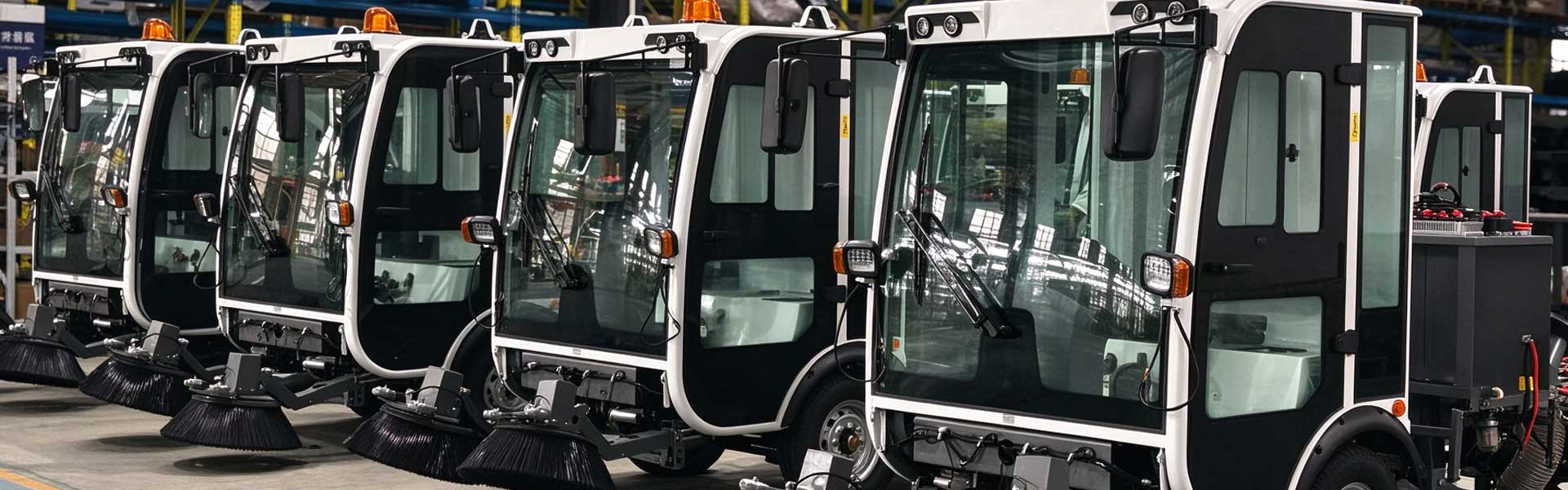
Dusty concrete floors are a common challenge in warehouses, manufacturing plants, workshops and distribution centers. Fine dust, packaging debris and production residues can accumulate throughout the working day, making manual sweeping time-consuming and increasing the workload for cleaning staff.
For businesses managing large indoor areas, an industrial floor sweeper can help collect loose dust and debris more efficiently. Choosing the right machine depends on the floor condition, cleaning area, dust volume and frequency of operation.
Voril supplies electric floor sweepers for commercial and industrial applications, helping overseas buyers identify suitable equipment for their facilities.
Why Use a Floor Sweeper on Dusty Concrete Floors?
Concrete floors are durable, but their surface texture can allow dust and fine particles to accumulate, particularly in busy industrial environments. Forklift traffic, material handling and production activities may generate additional debris throughout the day.
Manual sweeping can be sufficient for small areas, but larger facilities often need a more productive solution.
An industrial floor sweeper can offer several practical advantages:
-
Reduce cleaning labor: Mechanical sweeping can cover larger areas with less repetitive manual work.
-
Improve daily cleaning efficiency: Operators can collect loose dust, paper scraps and other suitable debris during routine cleaning.
-
Support cleaner working areas: Regular sweeping helps prevent loose debris from accumulating around storage and production zones.
-
Simplify large-area maintenance: Ride-on models can be useful for warehouses and factories with extensive floor space.
For facilities that generate significant airborne fine dust, buyers should also consider dust-control performance. A sweeper's filtration system and dust collection design are important, because sweeping without effective dust control may redistribute fine particles into the air.
Which Floor Sweeper Is Best for Your Facility?
Different machines suit different cleaning requirements. Before purchasing, consider the size of your facility and the amount of dust generated during normal operations.
1. Walk-Behind Floor Sweepers for Smaller Areas
Walk-behind sweepers can be suitable for workshops, smaller warehouses, storage rooms and areas with relatively narrow passages.
Their compact design can make maneuvering around workstations and stored materials easier. They are worth considering when a ride-on machine would be unnecessarily large for the available space.
When comparing models, check the working width, dustbin capacity, battery operating time and the machine's ability to maneuver through your narrowest cleaning routes.
2. Ride-On Floor Sweepers for Large Warehouses
For factories, logistics centers and distribution warehouses, a ride-on floor sweeper can reduce the time required to cover extensive concrete floors.
These machines allow operators to clean larger areas while seated, making them a practical option for facilities with long aisles and broad open spaces.
Buyers should compare working width, theoretical cleaning capacity, dustbin volume, battery endurance and turning radius. The most suitable model is not necessarily the largest one; it should fit the actual layout and workload.
3. Heavy-Duty Sweepers for Dusty Industrial Environments
Some industrial facilities generate dust from raw materials, packaging, manufacturing processes or frequent vehicle movement.
In these environments, buyers should evaluate the complete dust collection system, including filtration, sealing and the ease of emptying the dustbin.
If the facility contains substantial airborne fine dust or potentially hazardous particles, confirm the machine's suitability for those specific conditions. Standard industrial sweepers should not automatically be assumed suitable for combustible dust or hazardous-material cleanup.
What Should Buyers Check Before Purchasing?
When sourcing a floor sweeper for dusty concrete floors, provide your supplier with the following information:
-
Total cleaning area and approximate cleaning frequency.
-
Type and quantity of dust and debris.
-
Indoor operating conditions and floor surface.
-
Narrowest aisle and available turning space.
-
Required operating time per charge.
-
Preferred walk-behind or ride-on configuration.
-
Dust collection requirements and local service expectations.
For overseas buyers, also confirm spare parts availability, warranty terms, charging requirements and shipping arrangements.
These details make it easier to compare suitable machines and avoid selecting equipment based solely on advertised cleaning capacity.
Find the Right Industrial Floor Sweeper with Voril
Voril works with overseas importers, distributors, equipment dealers and industrial end users looking for practical floor cleaning equipment.
We help buyers compare available electric floor sweeper models according to cleaning area, dust conditions, operating time and budget. Depending on the application, options may include compact walk-behind machines and larger ride-on sweepers.
If your facility has dusty concrete floors, share the floor area, dust type, working environment and expected daily operating time when requesting a quotation.
Contact Voril to discuss an industrial floor sweeper for warehouses, factories and dusty concrete floors.