
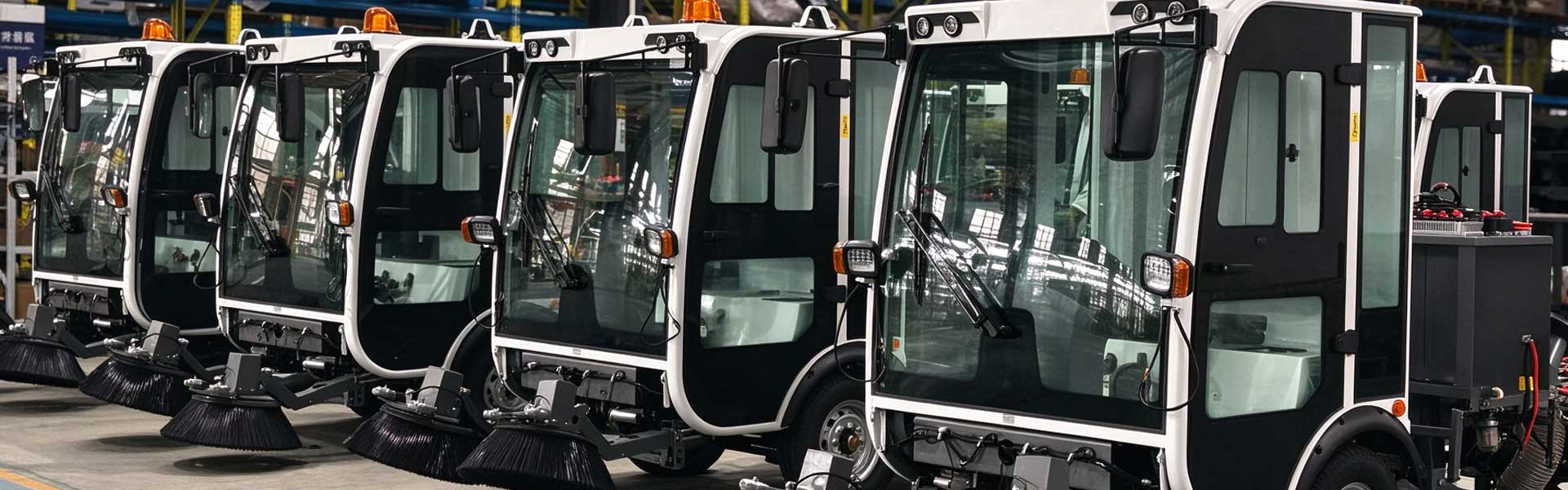
When purchasing cleaning equipment for a warehouse, factory, logistics center, or commercial property, one common question is whether to choose an industrial floor sweeper or a floor scrubber.
Both machines help businesses maintain cleaner floors, but they serve different purposes. A floor sweeper is primarily designed to collect dry dust, dirt, and loose debris. A floor scrubber is designed to wash the floor and recover dirty water, making it more suitable for many stains and residues that require wet cleaning.
Choosing the right machine starts with understanding what needs to be removed from the floor and how often cleaning must be performed.
1. When Should You Choose an Industrial Floor Sweeper?
An industrial floor sweeper is a practical option for facilities where loose dirt, dust, and debris are the main cleaning problems.
Warehouses, manufacturing workshops, parking areas, loading zones, and logistics centers may accumulate packaging debris, dust, small particles, and other dry waste throughout the day.
A suitable industrial floor sweeper for sale can collect this material using rotating brushes and a dust collection system, depending on the model.
Floor sweepers are worth considering when your business needs to:
-
Collect dust and loose debris from large floor areas.
-
Maintain warehouse aisles and loading zones.
-
Clean factory floors before wet washing.
-
Reduce manual sweeping across large spaces.
-
Maintain outdoor paved areas with suitable equipment.
Walk-behind sweepers may be appropriate for smaller spaces, while ride-on sweepers can be more practical for larger facilities.
When selecting a machine, consider the cleaning width, dustbin capacity, floor condition, debris type, maneuverability, and expected daily workload.
2. When Is a Floor Scrubber the Better Choice?
A floor scrubber is designed for cleaning tasks that require water, brushes or pads, and wastewater recovery.
It may be a better choice for indoor facilities where floors accumulate tracked-in dirt, light stains, footprints, or residues that dry sweeping alone cannot adequately remove.
For example, a food distribution warehouse with suitable washable floors may require regular wet cleaning. A shopping center or production facility may also need a scrubber to maintain the appearance of frequently used floor surfaces.
A scrubber generally combines cleaning solution delivery, mechanical scrubbing, and water recovery. However, its suitability depends on the floor material and the type of contamination.
When evaluating an industrial floor scrubber supplier, provide information about the surface, dirt level, floor area, and available cleaning time.
Walk-behind scrubbers can offer greater maneuverability, while ride-on models may be more suitable for wide, open spaces requiring frequent cleaning.
3. Floor Sweeper vs. Floor Scrubber: Key Differences
The main difference is the type of dirt each machine is designed to handle.
Floor sweeper: Best suited to dry dust, loose dirt, small debris, and routine debris collection.
Floor scrubber: Best suited to wet cleaning, scrubbing, and recovering dirty water from compatible floor surfaces.
A sweeper is not a direct replacement for a scrubber when a floor needs washing. Likewise, a scrubber may not be the most efficient first choice for collecting large amounts of dry debris.
For some facilities, using both machines can provide a more effective cleaning process. Loose debris is collected first, followed by wet scrubbing when needed.
This approach can be useful in larger workshops and warehouses where different types of contamination occur throughout the working day.
4. How to Choose the Right Equipment for Your Facility
When comparing commercial floor cleaning equipment, start with four purchasing considerations.
Floor area: Small facilities may need compact equipment, while larger warehouses may benefit from wider cleaning paths and higher-capacity machines.
Floor condition: Identify whether the main problem is dry dust, loose debris, stains, or dirt that requires wet cleaning.
Operating environment: Consider narrow aisles, shelving, ramps, outdoor surfaces, and the space available for turning and storage.
Budget and maintenance: Compare the purchase price, consumables, battery requirements, replacement parts, and expected operating workload.
Buyers should also consider whether the equipment will be used daily, occasionally, or across multiple shifts. These factors help determine the appropriate machine size and configuration.
For overseas buyers, confirm local voltage requirements, battery and charger specifications, shipping arrangements, and spare parts availability before placing an order.
5. Can One Machine Handle Every Cleaning Task?
Some businesses hope to purchase one machine for every cleaning requirement. In practice, the best choice depends on the actual dirt and floor conditions.
For a warehouse with mainly dry dust and packaging debris, a sweeper may provide the most suitable starting point. For a commercial building where floors require regular washing, a scrubber may be more appropriate.
Facilities with both dry debris and washable floor contamination may benefit from a two-stage cleaning routine or a combination of equipment.
The goal is not necessarily to purchase more machines. It is to choose equipment that matches the cleaning task and avoids paying for capacity or functions the business does not need.
6. Request a Quotation for Your Cleaning Equipment
Before contacting a supplier, prepare the floor area, surface material, type of dirt, cleaning frequency, and available operating space. Photographs of the facility can help explain the application.
If you are a distributor, importer, or equipment dealer, identify the types of customers you serve and the machine categories you want to source.
Voril supports overseas business customers with industrial cleaning equipment selection, quotations, and export coordination.
Contact Voril to compare industrial floor sweepers and floor scrubbers and identify a suitable solution for your business.